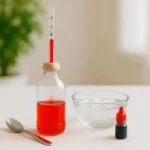

Ice cubes are something we use every day to chill our drinks, but have you ever stopped to think about how they work? Beyond just lowering the temperature of your beverage, ice cubes are a fascinating subject for scientific exploration. One particularly engaging and colorful experiment involves observing how different colored ice cubes affect heat transfer and melting speeds. In this blog post, we’ll delve into the science behind ice cubes, the role of color in heat transfer, and how you can conduct your own colorful ice cube experiment at home or in the classroom.
📱 Download Our Apps on Google Play
Click any app below to install it from the Google Play Store.


The Science of Ice Cubes and Heat Transfer
Before diving into the colorful aspect of ice cubes, let’s first understand the basic principles of heat transfer and how ice cubes melt. Ice cubes melt through the process of conduction, convection, and radiation—three primary methods of heat transfer.
- Conduction: This is the transfer of heat through direct contact between materials. When an ice cube sits in a drink, the warmer molecules in the liquid collide with the cooler molecules in the ice, causing the ice to absorb heat and begin to melt.
- Convection: This occurs when heat is transferred through the movement of fluids. As the liquid around the ice cube warms, it circulates, carrying heat away from the ice and speeding up the melting process.
- Radiation: All objects emit and absorb thermal radiation. The ice cube absorbs heat from its surroundings through radiation, contributing to its melting.
The melting rate of an ice cube depends on several factors, including the temperature of the surrounding environment, the volume of the ice cube, and the material it’s made of. However, one factor we often overlook is color. The color of an ice cube can influence how much heat it absorbs from its surroundings, which can, in turn, affect how quickly it melts.
The Role of Color in Heat Transfer
Color plays a significant role in heat transfer because different colors absorb and reflect different wavelengths of light. Dark colors tend to absorb more light and, consequently, more heat, while light colors reflect more light and absorb less heat. This principle is why darker objects often feel warmer in direct sunlight than lighter-colored objects.
In the context of ice cubes, the color of the cube can affect how much heat it absorbs from its surroundings. A darker-colored ice cube will absorb more heat than a lighter-colored one, potentially causing it to melt faster. This phenomenon can be observed by creating ice cubes of different colors and measuring their melting rates under the same conditions.
A Fun and Educational Experiment: Colorful Ice Cubes
If you’re looking for a fun and educational STEM experiment for kids or students, creating colorful ice cubes to observe heat transfer and melting speeds is an excellent choice. This experiment is simple, inexpensive, and provides valuable insights into the principles of thermodynamics.
Materials Needed:
- Water
- Food coloring or liquid watercolors
- Ice cube trays
- A clear container or tray for displaying the colored ice cubes
- A stopwatch or timer
- Thermometer (optional)
- Paper and pencil for recording observations
Step-by-Step Instructions:
- Prepare the Colored Ice Cubes
- Start by filling each section of an ice cube tray with water. Add a few drops of food coloring to each section to create different colors. You can use a single color per cube or mix colors to create unique shades.
- Place the ice cube tray in the freezer and allow the water to freeze completely. This should take several hours, depending on your freezer’s temperature.
- **Set Up the Experiment)
- Once the ice cubes are frozen, remove them from the tray and place them on a flat surface or in a clear container. If using a container, make sure it’s large enough to hold all the ice cubes and allows for even heat distribution.
- If you have a thermometer, you can use it to measure the initial temperature of the surrounding environment. This will help you understand the starting conditions for the experiment.
- **Observe and Record Melting Speeds)
- Start the stopwatch or timer and observe how the ice cubes begin to melt. Use the paper and pencil to record your observations, noting which colors seem to be melting faster or slower.
- Pay attention to the rate at which each ice cube loses its shape and shrinks in size. You may also want to note any differences in the formation of puddles around the cubes.
- **Analyze the Results)
- After the ice cubes have completely melted, compare your observations. Did the darker-colored ice cubes melt faster than the lighter ones? Were there any unexpected results?
- Discuss the reasons behind these observations. How does the color of the ice cubes affect their rate of melting? What role does heat transfer play in this process?
- **Extend the Experiment)
- To make this experiment more comprehensive, you can introduce additional variables. For example, you could compare the melting rates of ice cubes made from different materials (e.g., gelatin or crushed ice) or test how the temperature of the surrounding environment affects the melting process.
- Another interesting variation is to observe how the shape of the ice cubes influences their melting rates. For instance, cubes with more surface area may melt faster than those with less surface area.
Understanding the Results: Heat Transfer and Melting Speeds
When you conduct the colorful ice cube experiment, you’ll likely notice that the darker-colored ice cubes melt faster than the lighter ones. This is because darker colors absorb more heat from their surroundings, causing the ice to melt at a faster rate. Lighter colors, on the other hand, reflect more light and absorb less heat, resulting in a slower melting process.
This phenomenon can be explained by the principles of blackbody radiation. According to this theory, all objects emit and absorb thermal radiation. The color of an object influences its emissivity, or its ability to emit and absorb radiation. Darker objects have higher emissivity, meaning they are more efficient at absorbing and emitting heat, while lighter objects have lower emissivity.
In the context of ice cubes, the color of the cube affects its emissivity and, consequently, its melting rate. A darker-colored ice cube has a higher emissivity than a lighter-colored one, so it absorbs more heat from its surroundings and melts faster. Conversely, a lighter-colored ice cube absorbs less heat and melts more slowly.
Applications and Implications
While the colorful ice cube experiment is primarily a fun and educational activity, it has real-world implications in the fields of thermodynamics, materials science, and even environmental science. Understanding how color affects heat transfer can help us design more efficient cooling systems, develop materials with improved thermal properties, and even contribute to the creation of more sustainable technologies.
For example, in construction, the color of a building’s exterior can impact its energy efficiency. Dark-colored materials absorb more heat from the sun, increasing the need for air conditioning in warmer climates. On the other hand, light-colored materials reflect more sunlight, reducing the amount of heat absorbed and lowering cooling costs.
In the automotive industry, the color of a car’s paint can affect its fuel efficiency. Darker cars absorb more heat, which can increase the temperature inside the vehicle, leading to increased use of air conditioning and higher fuel consumption. Lighter-colored cars reflect more sunlight, keeping the interior cooler and improving fuel efficiency.
Fun Facts and Creative Uses for Colorful Ice Cubes
- Colorful Cocktails: Add a touch of color to your drinks with colorful ice cubes. You can use food coloring to create cubes in your favorite colors or match them to the theme of your event.
- Ice Sculptures: Use colored ice cubes to create stunning ice sculptures or centerpieces for parties and special occasions. Simply stack the cubes in the desired shape and let them freeze together.
- Interactive Art: Arrange colored ice cubes in a pattern or design on a plate or tray and watch as they melt, creating an ephemeral art piece. This can be a fun and creative activity for kids.
- Educational Tool: Use colored ice cubes to teach children about heat transfer, color absorption, and the scientific method. This hands-on experiment makes learning exciting and engaging.
- Themed Events: Use colored ice cubes to match the theme of your event. For example, use red and green cubes for a holiday party, blue cubes for a pool-themed event, or pastel-colored cubes for a spring celebration.
Conclusion
Colorful ice cubes are more than just a fun addition to your drink—they offer a unique opportunity to explore the principles of heat transfer and thermodynamics. By conducting the colorful ice cube experiment, you can gain a better understanding of how color affects the melting rate of ice and how this relates to real-world applications in fields like construction, automotive design, and energy efficiency.
So next time you reach for an ice cube to cool your drink, remember the science behind it. Use colorful ice cubes to add a touch of color and a dash of science to your next gathering, or conduct your own experiment to delve deeper into the fascinating world of heat transfer and ice melting speeds. Whether you’re a student, a teacher, or simply someone with a curious mind, the colorful ice cube experiment is an engaging and educational activity that’s sure to captivate and inspire.

100+ Science Experiments for Kids
Activities to Learn Physics, Chemistry and Biology at Home
Buy now on Amazon
Advanced AI for Kids
Learn Artificial Intelligence, Machine Learning, Robotics, and Future Technology in a Simple Way...Explore Science with Fun Activities.
Buy Now on Amazon
Easy Math for Kids
Fun and Simple Ways to Learn Numbers, Addition, Subtraction, Multiplication and Division for Ages 6-10 years.
Buy Now on Amazon🚀 Try These Free Android Apps
Download these useful apps directly from the Google Play Store.