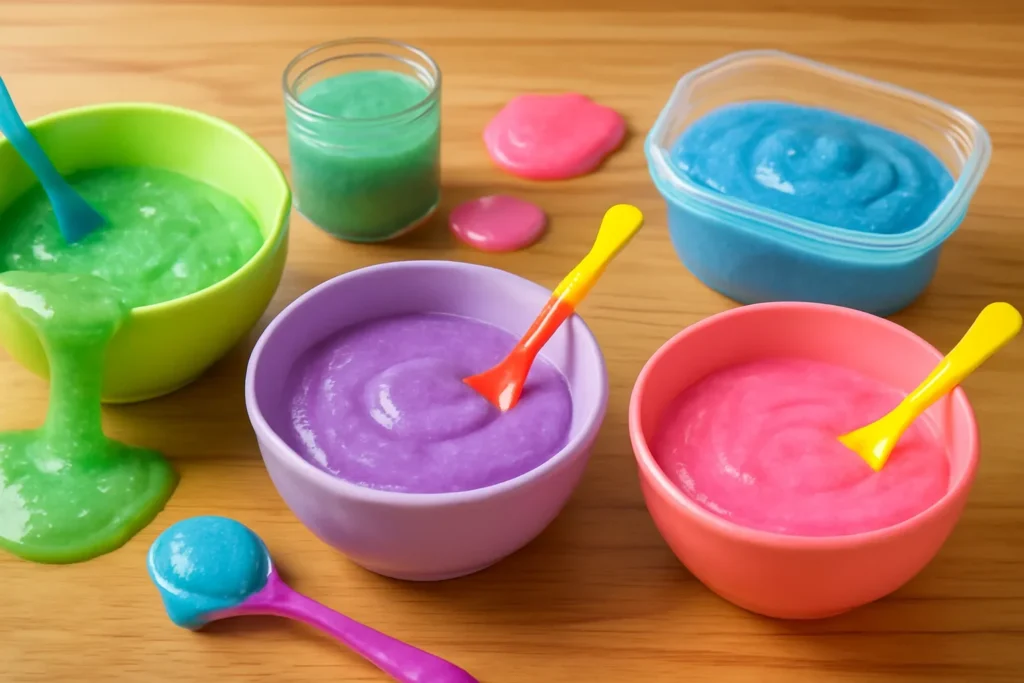

Rock candy is more than a sweet treat – it’s a hands‑on illustration of the power of crystal formation. When a saturated sugar solution cools, you witness a living crystal grow, giving kids (and adults!) a visual proof of chemistry in action. In this guide you’ll find a detailed recipe for homemade rock candy, background on the science of crystal growth, safety reminders, and ideas for extending the experiment into a deeper learning experience.
📱 Download Our Apps on Google Play
Click any app below to install it from the Google Play Store.


Why Rock Candy Is the Perfect Crystal‑Formation Experiment
- Visible Results: The crystal’s growth from a single nucleus to a large, multi‑layered sugar block is striking.
- Simple Materials: Water, sugar, and food coloring – all you need are a pot, a spoon, and a string.
- Hands‑On Learning: The process involves measuring, dissolving, and watching, which ties theory to tangible experience.
- Safe & Family Friendly: No toxic chemicals and minimal risk when you follow the safety guidelines.
Understanding crystal formation is part of foundational chemistry knowledge. It explains how minerals form underground, how snowflakes develop, and how certain foods (like meringues and fondant) get their texture.
Materials and Safety Checklist
| Item | Quantity | Purpose |
|——|———-|———|
| Granulated sugar | 2‑3 lbs (≈5‑6 cups) | Saturated solution |
| Water | 8 cups | Solvent |
| Food coloring | 1‑2 tsp | Visual appeal |
| Vinegar | 1 tsp (optional) | Enhances clarity |
| Horizontal string or chalk line | 1 | Nucleation site |
| Heavy‑bottom pot | 1 | Even heat distribution |
| Measuring cups & spoons | 1 set | Accurate measurement |
| Saucepan or heat‑proof jar | 1 | Heat vessel |
| Sticky note or wooden spoon | 1 | Stirring & seed placement |
Safety First:
- Heat water in a well‑ventilated area.
- Never leave a hot pot unattended.
- Use heat‑resistant gloves if handling the pot.
- Keep a small bowl of cold water nearby to cool the pot if it gets too hot.
- Wash your hands after handling sugar solution.
Step‑by‑Step Guide to Making Rock Candy
- Boil the Water – Fill the pot with 8 cups of water and set it on a medium flame. Bring it to a gentle boil, which takes roughly 5 minutes.
- Add Sugar – Once boiling, start adding sugar four packets at a time (each packet is roughly ¼ cup). Stir continuously to ensure it dissolves completely. If you prefer a thicker solution, add a bit more sugar.
- Sweetness Test – Drop a swirl of the syrup onto a cold plate. If it doesn’t form a film and solidifies within 2‑3 seconds, your solution is saturated.
- Optional Clarifying – For clearer crystals, dissolve 1 tsp of vinegar or lemon juice. The acid prevents impurity crystals from forming.
- Prepare the String – Tie a piece of string (≈8 inches) to the middle of a sticky note or a small wooden spoon. Place the cost of seeds (pencil eraser, glass bead, or a small piece of raw sugar) on the string.
- Submerge – Lift the string into the syrup, ensuring it hangs free and does not touch the bottom or sides. This creates a nucleation site where crystals will start.
- Set the Pot – Place the pot on a flat surface and let it sit at room temperature for at least 6‑8 hours. The sugar will crystallize onto the string.
- Monitor Growth – Check after the first night. A crystal should be noticeable by now. You can gently stir with a clean utensil if you see clumping.
- Completion – Once the crystal reaches your desired size (typically 2‑3 inches long), remove it. Let it dry for 30 minutes on a clean surface.
- Taste Test – Eat a small bite; it should crackle and dissolve in your mouth, confirming a successful sugar crystal.
Batching Tips
- For single crystals, using fewer sugars per batch yields smaller but cleaner crystals.
- For larger crystals, add as many sugar packets as possible while ensuring the mixture remains saturated.
- A wet elixir (washed with a tiny amount of water after each sugar packet) will dissolve more quickly.
The Science of Crystal Formation
Crystal formation, or crystallization, is governed by nucleation and growth. When a solution becomes supersaturated – meaning it contains more dissolved solute than can remain in solution at equilibrium – it seeks a nucleation site where the solute molecules or ions can arrange themselves into a repeating lattice.
Crystal growth is the process where additional molecules align with the lattice, extending the crystal. The structure you see in rock candy is a form of sodium(II) sulfate? Actually sugar crystals are composed of sucrose molecules, each pairing with water molecules from the solvent.
Key Terms
- Supersaturation – The state of an over‑concentrated solution.
- Nucleation – The moment a stable cluster of molecules forms, allowing a crystal to develop.
- Lattice – The regular, repeating arrangement of a crystal’s atoms or molecules.
Random impurities can hinder crystal growth, giving the final product a cloudy appearance. This is why a clean, pure solution and a small, well‑placed seed crystal produce the smoothest, most transparent crystals.
Extending the Experiment
1. Texture Variation
- Add spices: Cinnamon or nutmeg can be added to the syrup before cooling; they get incorporated into the crystal structure, offering a subtle flavor.
- Double‑layer crystals: Once a preliminary crystal forms, remove it and re‑introduce sugar to let a second, larger layer grow on top.
2. Comparative Analysis
- Different sugars: Try dextrose (glucose) or fructose solutions and observe differences in crystal size, transparency, and sweetness.
- Temperature influence: Conduct the same build at 4°C (using an ice bath) vs. 25°C; cooler temperatures increase the depth of supersaturation before nucleation can happen.
3. Real‑World Applications
- Updating your knowledge about how mineral deposits form in lakes.
- Understanding the crystallization of hard water when soap reacts with calcium ions, producing the familiar lumpy soap.

100+ Science Experiments for Kids
Activities to Learn Physics, Chemistry and Biology at Home
Buy now on Amazon
Advanced AI for Kids
Learn Artificial Intelligence, Machine Learning, Robotics, and Future Technology in a Simple Way...Explore Science with Fun Activities.
Buy Now on Amazon
Easy Math for Kids
Fun and Simple Ways to Learn Numbers, Addition, Subtraction, Multiplication and Division for Ages 6-10 years.
Buy Now on Amazon🚀 Try These Free Android Apps
Download these useful apps directly from the Google Play Store.