
Acid-base reactions form the foundation of countless chemical processes in our daily lives. Fortunately, you don’t need a laboratory to witness these fascinating transformations. With common household materials, anyone can explore pH shifts, color changes, and neutralizing effects that showcase fundamental chemistry principles. These experiments offer safe, accessible insights into how substances interact at the molecular level, turning your kitchen into a scientific playground.
Understanding Acids, Bases, and pH Fundamentals
Acids release hydrogen ions (H⁺) in solution, while bases release hydroxide ions (OH⁻). The pH scale, ranging from 0-14, measures acidity (pH<7) or alkalinity (pH>7). Neutralization occurs when acids and bases react to form water and salt. Household acids include vinegar (acetic acid), lemon juice (citric acid), and carbonated sodas (carbonic acid). Common bases include baking soda (sodium bicarbonate), soap, and antacids. Recognizing these helps predict reaction outcomes without specialized equipment.
Essential Materials for Kitchen Chemistry
You’ll need acidic substances like distilled white vinegar or citrus fruits. Basic compounds include baking soda and powdered laundry detergent. Indicator materials consist of red cabbage juice or turmeric powder. Use clear containers for observations and protective gear like goggles. Optional tools include measuring spoons and pipettes for precision. Always designate separate utensils for experiments to avoid cross-contamination with food items.
Natural pH Indicator Creation
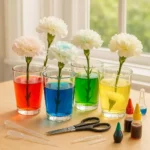
Red cabbage contains anthocyanin pigments that change color based on pH. Chop half a cabbage, boil it in water for 10 minutes, and strain the purple liquid. When added to solutions, the indicator turns red/pink in acids, purple at neutral pH, and blue/green in bases. Turmeric offers another alternative: its yellow pigment turns red-brown in basic solutions. These homemade indicators provide visual confirmation of chemical properties.
Acid-Base Reaction Experiments
The Classic Baking Soda Volcano
Mix vinegar with dish soap in a bottle. Add baking soda and observe an immediate eruption. This reaction produces carbon dioxide gas: CH₃COOH + NaHCO₃ → CH₃COONa + H₂O + CO₂↑. The soap traps CO₂ bubbles, creating foam. For quantitative analysis, measure vinegar before and after reaction to note volume decrease from gas production.
Neutralization Timeline Test
Measure ½ cup of vinegar into a clear glass and stir in red cabbage indicator. Slowly add baking soda tablespoons while timing the reaction. Record how long it takes for the solution to turn from pink (acidic) to violet (neutral). This demonstrates gradual neutralization: moles of acid decreasing as base counteracts them, as explained by stoichiometry principles.
Antacid Effectiveness Comparison
Crush different antacids (Tums® versus Alka-Seltzer®) and dissolve each in vinegar. Use cabbage indicator to measure how long the solution stays acidic versus neutralizing. Faster reactions indicate stronger bases. Compare results against manufacturer alkalinity claims to reinforce real-world applications of acid-base chemistry in pharmacology.
Why Household Reactions Occur
Proton transfer drives these interactions. In cleaning applications, bases dissolve grease by saponification. Effervescence signals gas evolution during carbonate-base and acid reactions. Corrosion appears when acids decompose metals like aluminum foil in vinegar. Understanding these reaction mechanisms explains phenomena from baking processes to ecological systems.
Safety Protocols
Always work in well-ventilated areas. Use eye protection and gloves with stronger bases like bleach. Designate separate containers for food versus experiments. Label solutions clearly and neutralize waste before disposal. As noted by the American Chemical Society, supervision is crucial when children conduct experiments.
Practical Applications
Acid-base chemistry regulates digestion through stomach acid neutralization. Environmental scientists test soil pH for crop health using similar indicators. Cooking relies on reactions like baking soda reacting with buttermilk to leaven biscuits. Even pool maintenance depends on pH balance to prevent corrosion or scaling.
Exploring acid-base reactions demystifies fundamental chemical processes using accessible materials. Each kitchen experiment reinforces theoretical concepts through observable phenomena like color shifts or gas production. We encourage you to safely test household items to deepen your understanding of chemical interactions. Share your discoveries documenting acid-base reactions with educators to spread scientific curiosity.
Frequently Asked Questions
Q1. Why does baking soda mixed with vinegar bubble?
The bubbling occurs due to carbon dioxide gas production. Vinegar provides acetic acid while baking soda acts as base sodium bicarbonate. When combined, they undergo acid-base neutralization: their hydrogen and hydroxide ions form water while the carbonate decomposes. Decomposition releases CO₂ gas causing the fizzy effervescence observed.
Q2. Can I use other vegetables besides red cabbage as pH indicators?
Yes, numerous plant materials contain pigment-based indicators. Beet juice turns brighter red in acids and yellow in bases. Hibiscus tea transitions pink-to-green, resembling cabbage juice properties. Anthocyanin-rich blueberries provide pH-sensitive hues too. Consistency varies by concentration, so boiling extracts yield clearer results than crude pulps.
Q3. Why does soap feel slippery on your skin?
Soap molecules contain long hydrocarbon tails and ionic heads. In water, sodium hydroxide reacts with fatty acids forming alkaline soap. Bases feel slippery because they react with skin oils undergoing saponification. This reduces friction between fingers creating the distinctive slick sensation. Higher pH solutions like drain cleaners exhibit this more intensely.