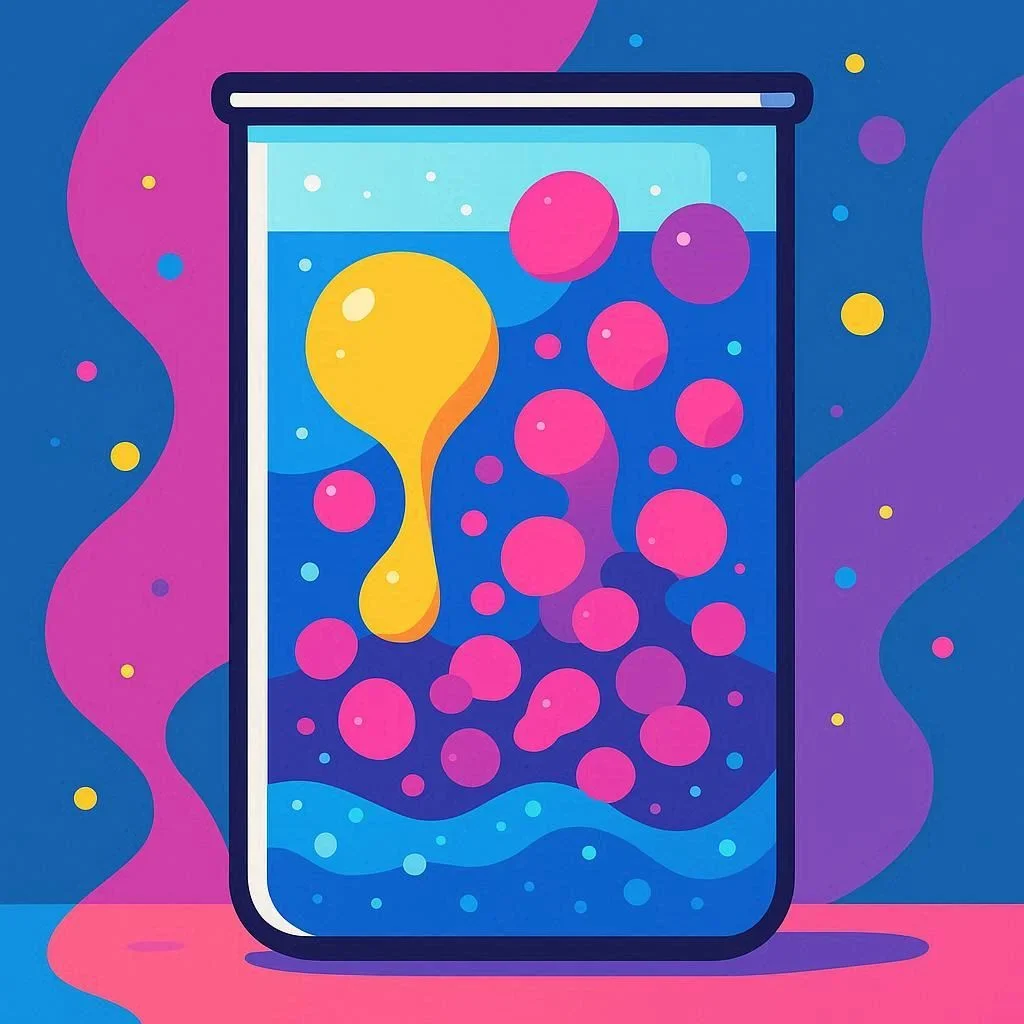

Creating a vivid, layered display in a simple glass jar is more than a decoration—it’s a hands‑on lesson in physics, chemistry, and visual art. When you create a Rainbow Jar, you explore how liquids with different densities settle in order, forming a permanent spectrum that never mixes. This activity works for classrooms, homeschooling environments, and weekend family fun, and it requires only everyday kitchen ingredients. Below you will find everything you need to set up the experiment, the science behind each layer, and expert tips to ensure clean, crisp color separation every time. Whether you are a teacher looking for a low‑cost demonstration or a curious parent wanting to spark curiosity, this guide walks you through the process step by step.
📱 Download Our Apps on Google Play
Click any app below to install it from the Google Play Store.

Materials You’ll Need
- Clear glass or plastic jar with a wide mouth (a mason jar works well).
- Sugar, corn syrup, salt, and dish soap – these create liquids of varying density.
- Food coloring or natural colorants (beet juice, turmeric, blueberry puree).
- Measuring cups, spoons, and a small funnel or pipette for precise pouring.
- Stirring sticks or spoons, and a timer.
Understanding Liquid Density
Density is defined as mass per unit volume (density), meaning a heavier liquid will sink below a lighter one if the two are miscible. The classic example is oil floating on water because oil’s molecular structure is less compact. By dissolving different amounts of sugar, salt, or corn syrup in water, you can fine‑tune each solution’s density. The more solutes you add, the denser the solution becomes. This principle is the cornerstone of the layered liquids experiment, allowing you to stack colors without them blending.
Step‑by‑Step Guide to Build Your Rainbow Jar
- Prepare the base layer. Dissolve 1 cup of corn syrup in ½ cup of warm water. Add a few drops of red food coloring and stir until fully blended. Because corn syrup is very dense, this mixture will sit at the bottom.
- Create the second layer. Mix 1 cup of water with ¼ cup of granulated sugar. Add orange coloring. This solution is less dense than the corn‑syrup base but still heavier than plain water.
- Make the third layer. Combine 1 cup of water with 2 tablespoons of salt. Color it yellow. Salt water sits above the sugar mixture.
- Fourth layer – lightest liquid. Fill a cup with plain water and add green coloring. Optionally, a tiny amount of dish soap can be added to reduce surface tension, helping the liquid flow smoothly.
- Final top layers. Repeat the process with decreasing amounts of solutes to create blue, indigo, and violet layers. Each layer should be poured slowly over the back of a spoon or through a funnel to avoid disturbing the previous one.
Patience is key: let each layer settle for 30–60 seconds before adding the next. If a layer mixes, gently tap the jar’s side to encourage the denser liquid to sink back into place.
Tips for Perfect Layers
To achieve crisp, non‑mixing layers, consider these expert recommendations:
- Temperature control: Warm liquids are less viscous, allowing them to flow gently. Cool each solution to room temperature before pouring.
- Use a narrow spout: A medicine dropper or a small funnel gives you better control over the flow rate.
- Adjust density increments: If two colors blend, increase the solute concentration of the lower layer by 5–10 % and test again.
- Surface tension modifiers: A drop of dish soap in the topmost layer can help keep it from spilling over the edges.
Common Mistakes to Avoid
Even experienced teachers encounter pitfalls. Here are the most frequent errors and how to fix them:
- Pouring too quickly: Rapid pouring creates turbulence that mixes layers. Slow, steady streams are essential.
- Using the same color for adjacent layers: Similar shades can give the illusion of mixing. Choose contrasting colors for clarity.
- Neglecting to measure precisely: Small variations in solute amounts dramatically affect density. Use calibrated measuring spoons.
- Skipping the settling time: Each layer needs a moment to stabilize. Rushing the sequence leads to blurred bands.
Why This Experiment Works
The science behind the rainbow jar is rooted in fundamental physics. As described by NASA density guide, fluids arrange themselves from highest to lowest density under gravity. When colors are added, the visual effect accentuates the invisible property of density, making abstract concepts tangible. Educational researchers from fluid dynamics tutorial emphasize that hands‑on manipulation improves retention of scientific principles by up to 40 % compared with lecture‑only approaches. Moreover, the activity aligns with the DOE science education standards for elementary grades, covering topics such as measurement, matter properties, and experimental design.
Extending the Activity
Once you have mastered the basic rainbow jar, try these variations to deepen learning:
- Temperature experiments: Heat a layer slightly and observe how its position changes as it cools.
- Alcohol layers: Replace water with isopropyl alcohol for a clear, low‑density top layer.
- Scientific journals: Record the exact concentrations, temperature, and time for each layer in a lab notebook.
- Art projects: Use the jar as a centerpiece for a science‑themed party, letting guests predict the order of colors before mixing.
Conclusion and Call to Action
Now you have everything required to create a Rainbow Jar that dazzles the eye and teaches core scientific ideas. Gather your supplies, follow the step‑by‑step instructions, and watch the colors settle into a permanent spectrum of density. Share photos of your finished jar on social media with the hashtag #RainbowJarScience, and invite friends or students to try the experiment at home. If you enjoyed this guide, subscribe to our newsletter for more free science activity ideas, printable worksheets, and video tutorials that bring classroom concepts to life. Let’s keep exploring the colorful world of science—one jar at a time!

100+ Science Experiments for Kids
Activities to Learn Physics, Chemistry and Biology at Home
Buy now on Amazon
Advanced AI for Kids
Learn Artificial Intelligence, Machine Learning, Robotics, and Future Technology in a Simple Way...Explore Science with Fun Activities.
Buy Now on Amazon
Easy Math for Kids
Fun and Simple Ways to Learn Numbers, Addition, Subtraction, Multiplication and Division for Ages 6-10 years.
Buy Now on Amazon🚀 Try These Free Android Apps
Download these useful apps directly from the Google Play Store.