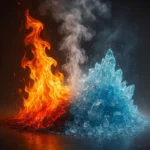

Permafrost, a term you may encounter in climate reports or adventure travel guides, refers to a layer of soil that remains frozen for at least two consecutive years. This geological phenomenon is not just a static chunk of ice; it plays a pivotal role in global ecosystems, climate regulation, and the livelihood of communities spread across polar and subpolar regions. Understanding permafrost helps us appreciate both its natural beauty and its vulnerability to a warming planet.
📱 Download Our Apps on Google Play
Click any app below to install it from the Google Play Store.



What Is Permafrost?
At its core, permafrost is a permanently frozen layer of ground that includes soil, rock, sediment, and organic matter. Almost 24% of the Earth’s surface area, including parts of Canada, Alaska, Greenland, Russia, and parts of the northern United States, lies beneath a cold blanket of permafrost. While the uppermost layer, known as the active layer, thaws seasonally, the deeper strata stay icy, acting as a slow-moving reservoir that stores enormous amounts of organic carbon and methane.
How Permafrost Forms
Permafrost develops under conditions where the mean annual air temperature (MAAT) is around –2°C or lower. Over thousands of years, cold temperatures sequester heat in the soil and create a continuous frozen layer that can extend to several hundred meters deep. The process is amplified by insulation from snow and vegetation that reduces solar warming. The type of soil, moisture content, and historical climate all influence the depth and distribution of permafrost. Researchers frequently consult data from the European Space Agency’s satellite observations to map and monitor these frozen substrates.
Current Threats to Permafrost
The big headline threat is global warming. As atmospheric temperatures climb, the freeze‑thaw cycle becomes more intense, causing permafrost to *thaw* or partially melt. When the frozen layer loses its integrity, it can yield out to form thermokarst lakes, cause ground subsidence, and destabilize infrastructure like roads, pipelines, and buildings. A 2022 study in Nature Climate Change demonstrated that a 1°C rise in average temperature could result in the loss of up to 30% of the world’s permafrost by 2100.
- Infrastructure failure due to ground subsidence
- Release of greenhouse gases such as methane
- Altered hydrology and increased erosion
- Loss of traditional lifestyles for indigenous peoples
Impact on Climate and Ecosystems
Permafrost is a silent player in the carbon cycle. About 1,500 gigatons of carbon are stored in the frozen ground—roughly twice the amount present in the atmosphere. As thaw occurs, organic matter decomposes, producing carbon dioxide and methane, potent greenhouse gases. This creates a feedback loop: warming leads to thaw, which releases gases that further accelerate warming, a phenomenon known as *permafrost feedback*.
Beyond the greenhouse gases, thawing permafrost reshapes landscapes and ecosystems. Wetlands expand, plant communities shift, and permafrost-dependence wildlife such as the musk oxen and the Arctic hare may struggle to adapt. The loss of permafrost also threatens the cultural heritage tied to ancient burial sites and logistic routes that have existed for centuries.
What Can Be Done?
Addressing permafrost threats requires a blend of mitigation, adaptation, and research. Here are key actions:
- Reduce Greenhouse Gas Emissions: Global commitments like the Paris Agreement aim to limit warming to 1.5°C, slowing permafrost thaw.
- Implement Engineered Solutions: Techniques such as ground insulation, increased building foundations, and artificial drainage help stabilize thawing soils.
- Promote Indigenous Knowledge: Community-based monitoring harnesses local expertise to track subtle changes.
- Expand Research Networks: The IPCC and universities worldwide cooperate to refine permafrost models, improving predictive accuracy.
- Public Awareness Campaigns: Raising global consciousness about permafrost’s role encourages policy shifts and individual responsibility.
Permafrost tells a broader story about Earth’s interconnected systems—a lesson on the consequences of unchecked climate change and the imperative of swift, decisive action. When we look at the frozen ground beneath our feet, we find a stark warning written in ice and an urgent call that demands both scientific rigor and compassionate governance.
Conclusion: Protecting Our Frozen Foundation
Permafrost is not just an environmental curiosity; it is a critical component of our planet’s climate gear. Ignoring its plight would have cascading effects—from intensified global warming to disrupted livelihoods. Join the movement to preserve permafrost: support carbon mitigation, engage in policy advocacy, and stay informed through reputable research outlets like NASA and USDA. Together, we can ensure that the ice beneath remains a silent guardian rather than an alarm waiting to be triggered.
Frequently Asked Questions
Q1. What exactly is permafrost?
Permafrost is ground that stays permanently frozen for at least two consecutive years. It can contain soil, rock, and organic matter and is found across large portions of the Arctic and sub‑arctic. The top few meters thaw each summer, but beneath lies a deep, continuous ice layer that can extend hundreds of meters. This frozen layer stores huge amounts of carbon and influences hydrology, geology, and local climates.
Q2. How does permafrost form?
Permafrost forms when mean annual air temperatures average about –2 °C or lower, allowing long‑term freezing in the ground. Snow and vegetation provide insulation that keeps the snowpack warm in summer, reducing melt. Over thousands of years, heat is trapped, creating a continuous frozen layer. Satellite observations and ground surveys help map its depth and extent.
Q3. What are the biggest threats to permafrost?
The primary threat is climate warming, which intensifies the freeze‑thaw cycle. Higher temperatures cause thaw, leading to ground subsidence, thermokarst lakes, infrastructure failure, and greenhouse gas release. Loss of permafrost also disrupts ecosystems and traditional ways of life for indigenous peoples.
Q4. How does permafrost affect global climate?
Permafrost stores about 1,500 gigatons of carbon—roughly twice the amount in the atmosphere. When it thaws, microbial decomposition releases CO₂ and methane, potent greenhouse gases that accelerate warming. This creates a feedback loop where warming thaws permafrost, which in turn amplifies warming.
Q5. What actions can help protect permafrost?
Key actions include reducing greenhouse gas emissions, implementing engineering solutions like ground insulation and drainage, supporting indigenous monitoring programs, expanding research collaborations, and raising public awareness. International agreements such as the Paris Accord aim to limit temperature rise, thereby slowing permafrost thaw.
Related Articles

100+ Science Experiments for Kids
Activities to Learn Physics, Chemistry and Biology at Home
Buy now on Amazon
Advanced AI for Kids
Learn Artificial Intelligence, Machine Learning, Robotics, and Future Technology in a Simple Way...Explore Science with Fun Activities.
Buy Now on Amazon
Easy Math for Kids
Fun and Simple Ways to Learn Numbers, Addition, Subtraction, Multiplication and Division for Ages 6-10 years.
Buy Now on Amazon🚀 Try These Free Android Apps
Download these useful apps directly from the Google Play Store.