
📱 Download Our Apps on Google Play
Click any app below to install it from the Google Play Store.


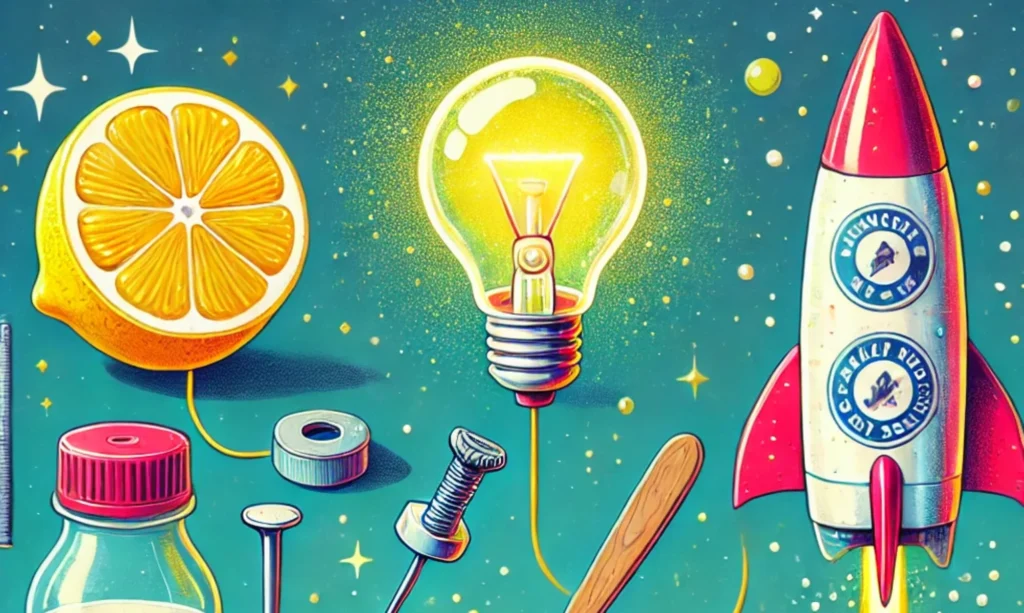
When a child rubs a balloon against their hair, the tiny charges that come to life in the balloon’s surface are the heart of a fascinating physics demonstration – the balloon static electricity experiment. This simple setup shows how friction transfers electrons, creating an imbalance of electric charge that can lift paper clips, attract dust, and even spark a tiny flash. By following the steps below, you can tap into the invisible forces that govern everyday phenomena like solar panels, photocopying, and spaceborne satellite protection.
Understanding the Basics: What is Static Electricity?
Static electricity is an accumulation of electric charge on a surface, usually caused by friction. When two materials separate after contact, electrons can transfer from one to the other, leaving one object negatively charged and the other positively charged. The balloon, as a flexible dielectric, is an ideal medium for holding onto excess electrons until it is released to the environment.
Key concepts you’ll encounter in this experiment include:
- Electrostatic Attraction – the pull between opposite charges.
- Electrostatic Repulsion – the push between like charges.
- Dielectric Material – an insulator that can store charge, such as latex or Mylar.
- Friction and Polarization – the mechanism for charge transfer.
- – how the balloon loses its charge over time.
Materials Needed for the Classic Balloon Static Electricity Experiment
While the experiment can be done with a wide variety of objects, this guide focuses on the most accessible and consistent set of materials.
- 1-2 party balloons (latex or Mylar are both acceptable)
- Human hair or a cotton t-shirt for rubbing
- Light paper (A4 or letter size)
- 1‑2 small metal objects (paper clips, pins, or household metal filings)
- Clean, dry surface or low‑humidity room to prolong charge retention
- Optional: A small insulated piece of plastic or a piece of sandpaper for checking charge density
Step‑by‑Step Procedure: From Friction to Attraction
Follow these detailed steps to carry out the experiment safely and effectively.
- Preparation. Inflate the balloon to a moderate size (spherical, not flattened). Avoid overinflation, which can cause the balloon to burst.
- Rubbing. Hold the balloon by its base and rub it vigorously against a section of your hair or a cotton t‑shirt for about 30 seconds. Keep the motion smooth and consistent to ensure a good build‑up of static charge.
- Immediate Observation. Bring the balloon close to the light paper; you should see the surface flutter as the paper is attracted to the balloon. Then, place a paper clip near the balloon and watch it lift very easily.
- Testing with Opposite Charges. Take a small metal pin (which will acquire a positive charge after contact) and bring it near the charged balloon. The pin should be repelled if it has the same charge, or attracted if it has the opposite.
- Record Duration. Measure how long the paper clip remains lifted before the balloon discharges, logging the time in seconds. This gives you a visual sense of how quickly static friction dissipates in an uncontrolled environment.
- Safety Check. Ensure no metallic objects are near your body except for the pins used in the experiment. Static discharges can be felt as a mild spark, but the risk of injury is negligible.
Why Does the Balloon Attract Paper?
The paper contains tiny fibers each already holding a balanced number of electrons. The surplus electrons on the balloon create an attractive force that pulls the paper toward the balloon. If the balloon is truly neutral after the experiment, the attraction disappears, confirming the role of charge imbalance in static interactions.
Exploring Variations and Extended Applications
The balloon static electricity experiment lends itself to many variations that deepen your understanding of electrostatics.
- Humidity Effect. Repeat the experiment in a humid environment and note how the excess moisture facilitates charge leakage, shortening the attraction duration.
- Material Comparison. Swap the latex balloon for a Mylar balloon to observe differences in charge retention, due to varying dielectric constants.
- Atomic‑Scale Insight. Use a simple electroscope (a DIY version made from a bottle cap and a thin wire) to measure the potential difference produced by the balloon, linking macro‑scale observations with micro‑scale charge theory.
- Real‑World Context. Compare the forces of electrostatics with those of gravitation by raising identical paper clips with the balloon; the static force can lift items many times heavier than gravity’s pull over tiny distances.
- Safety Demonstration. Use a fine‑mesh screen or a small photo‑electric cell to show that static discharges can damage sensitive electronics if not properly shielded.
Scientific Foundations You Can Reference
For an in‑depth theoretical backdrop, consult the following authoritative resources:
- Static Electricity on Wikipedia
- NIST – Instrumentation for Electric Charge Measurement
- HyperPhysics – Electrostatically Induced Charges
- Smithsonian Science Spotlight – Physics
- Exploratorium – Electrostatic Charging Experiments
Conclusion and Call to Action
By simply rubbing a balloon and watching it lift a feather or pinch a paper clip, you’ve engaged with one of physics’s most approachable demonstrations: the balloon static electricity experiment. It showcases how everyday materials can store electric charge and how this charge induces motion in the world around us. Understanding this concept not only fuels curiosity but also lays the groundwork for more advanced studies in fields from renewable energy to semiconductor manufacturing.

100+ Science Experiments for Kids
Activities to Learn Physics, Chemistry and Biology at Home
Buy now on Amazon
Advanced AI for Kids
Learn Artificial Intelligence, Machine Learning, Robotics, and Future Technology in a Simple Way...Explore Science with Fun Activities.
Buy Now on Amazon
Easy Math for Kids
Fun and Simple Ways to Learn Numbers, Addition, Subtraction, Multiplication and Division for Ages 6-10 years.
Buy Now on Amazon🚀 Try These Free Android Apps
Download these useful apps directly from the Google Play Store.