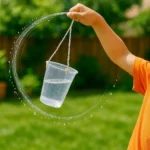
Building your own rain gauge is a simple yet rewarding project that lets you track precipitation on your property, contribute data to local weather monitoring, and gain a deeper understanding of your region’s climate. By gathering accurate rainfall measurements you can better manage irrigation, protect gardens, and even support scientific studies that rely on community weather data.
📱 Download Our Apps on Google Play
Click any app below to install it from the Google Play Store.

Materials & Tools for a Simple Rain Gauge
To construct an effective rain gauge you’ll need a few common items that are easy to source. Below is a concise list of the essentials, along with a few optional extras that enhance precision.
- Glass or acrylic cylinder (capacity 1 L or 2 L)
- Durable funnel (PVC or plastic) or a 90°‑bent pipe that funnels water into the cylinder
- Transparent tape or sealant for sealing joints
- Measuring tape or ruler (0.5 cm increments)
- Nylon or cloth screen to keep debris out (optional)
- Sturdy base or stand to keep the gauge upright and level
- Paint or waterproof spray to weather‑proof the unit (optional)
For calibration and validation you can compare your gauge’s readings with an official model, accessible via NOAA’s Weather.gov or the local National Weather Service office.
Step‑by‑Step Construction
Follow this straightforward process to create a reliable rain gauge. The steps are designed for beginners and can be finished in a single afternoon.
- Choose the Right Cylinder
Select a clear, 1‑ to 2‑litre bottle. A 2‑litre volume reduces the number of surface markings needed, but a 1‑litre bottle allows finer measurement. Ensure the cylinder is free of cracks and the cap is removable. - Attach the Funnel
Place a funnel that fits snugly on the cylinder’s opening. If you use a funnel with a wide mouth, position it so that the rim sits above the measurement column by roughly 5 cm. Secure it with tape to prevent it from shifting during rainfall. - Create a Clean Measurement Screen
Attach a screen or mesh over the funnel mouth. This keeps leaves or insects from clogging the tube. A fine nylon mesh works best. - Mark the Scale
Using a permanent marker or a band of tape, mark the 0.5‑cm levels along the cylinder. A 1‑centimeter line for every 2 mm of rainfall translates neatly: 1 cm equals ~10 mm. - Seal the Connections
Apply a waterproof sealant or high‑quality tape around the junctions—funnel to cylinder and cylinder to base—to prevent leaks. - Mount on a Stand
Place the assembled gauge on a level surface on an elevated stand, preferably outside where the gauge can remain exposed to natural precipitation but shielded from wind when possible.
Optional: For improved durability, coat the cylinder with a clear, UV‑resistant spray. This prevents scratches and maintains transparency.
Calibration & Accuracy Checks
Calibration ensures your gauge’s measurements match real rainfall. Calibrate by placing a graduated measuring cup over the gauge in a controlled rainfall simulation, or by comparing your gauge’s readings with the official gauge placement documented by Wikipedia’s Rainfall Measurement article. Use the following methods:
- Standard Water Collection: Pour a known volume of rain‑imitation water through the funnel and compare the level to the marked scale. Adjust the markings if necessary.
- Repetition Test: Conduct three separate fill‑and‑measure trials each day, record the differences, and average the values.
- Cross‑Check: Whenever possible, install your gauge near a nearby official gauge, such as the one maintained by your local National Data Center, and compare daily totals.
Keeping your gauge level is crucial. Use a small spirit level to verify and adjust every month, especially after heavy storms.
Using Your Rain Gauge to Monitor and Act
Once your gauge is calibrated, you can begin regular monitoring. Measure the water level at the same time each day—ideally in the early morning when the soil is moist and evaporation is minimal. Record the amount in a notebook or spreadsheet and track trends over weeks.
Why track daily totals? The data can inform irrigation schedules, protect your garden from over‑watering, and trigger early warnings for flood prevention. Trees, orchards, and lawns all benefit from precisely measured rainfall data.
Additionally, you can share your readouts with the climate network at your municipal weather office or through Citizen Weather Observer Network to help local scientists improve rainfall modeling.
Conclusion & Call to Action
Take the first step in mastering your local climate by building a rain gauge today. It’s a low‑cost, low‑effort project that can dramatically improve how you care for your environment. If you need guidance, remember the NOAA official resources are always available. A DIY rain gauge is more than a tool—it’s a connection to the science that shapes our daily lives. Start building, record the rain, and let the data influence your world.
Frequently Asked Questions
Q1. What are the main materials needed to build a rain gauge?
You’ll need a clear glass or acrylic cylinder with a capacity of 1‑2 liters, a fitting funnel, transparent tape or sealant, a measuring mark for every 0.5 cm, and a stable stand to keep the gauge level. Optional items include a nylon mesh screen to block debris and a UV‑resistant spray to protect the cylinder from weathering.
Q2. How do I ensure my gauge is calibrated accurately?
Calibrate by pouring a known volume of water (e.g., 10 cm³) into the funnel and checking the resulting level on the gauge’s scale. Compare readings with a reference rain gauge or use a graduated cup. Repeat the test three times and average the results to fine‑tune your markings.
Q3. How often should I check the gauge’s level and level the base?
Inspect the gauge after each heavy storm or once a month. Use a small spirit level to verify that the cylinder sits perfectly vertical. Adjust or tighten the stand as necessary to maintain accuracy.
Q4. Can I use this gauge for scientific data submission?
Yes, daily measurements can be uploaded to the Citizen Weather Observer Network or your local National Weather Service office. Provide the gauge’s calibration details and installation location for best compatibility with official datasets.
Q5. What maintenance should I perform to prolong the gauge’s life?
Clean the funnel and screen weekly to remove leaves or insects, rinse the cylinder with fresh water after each use, and reapply sealant if cracks appear. Avoid storing the gauge in direct sunlight for extended periods to prevent UV degradation.
Related Articles

100+ Science Experiments for Kids
Activities to Learn Physics, Chemistry and Biology at Home
Buy now on Amazon
Advanced AI for Kids
Learn Artificial Intelligence, Machine Learning, Robotics, and Future Technology in a Simple Way...Explore Science with Fun Activities.
Buy Now on Amazon
Easy Math for Kids
Fun and Simple Ways to Learn Numbers, Addition, Subtraction, Multiplication and Division for Ages 6-10 years.
Buy Now on Amazon🚀 Try These Free Android Apps
Download these useful apps directly from the Google Play Store.