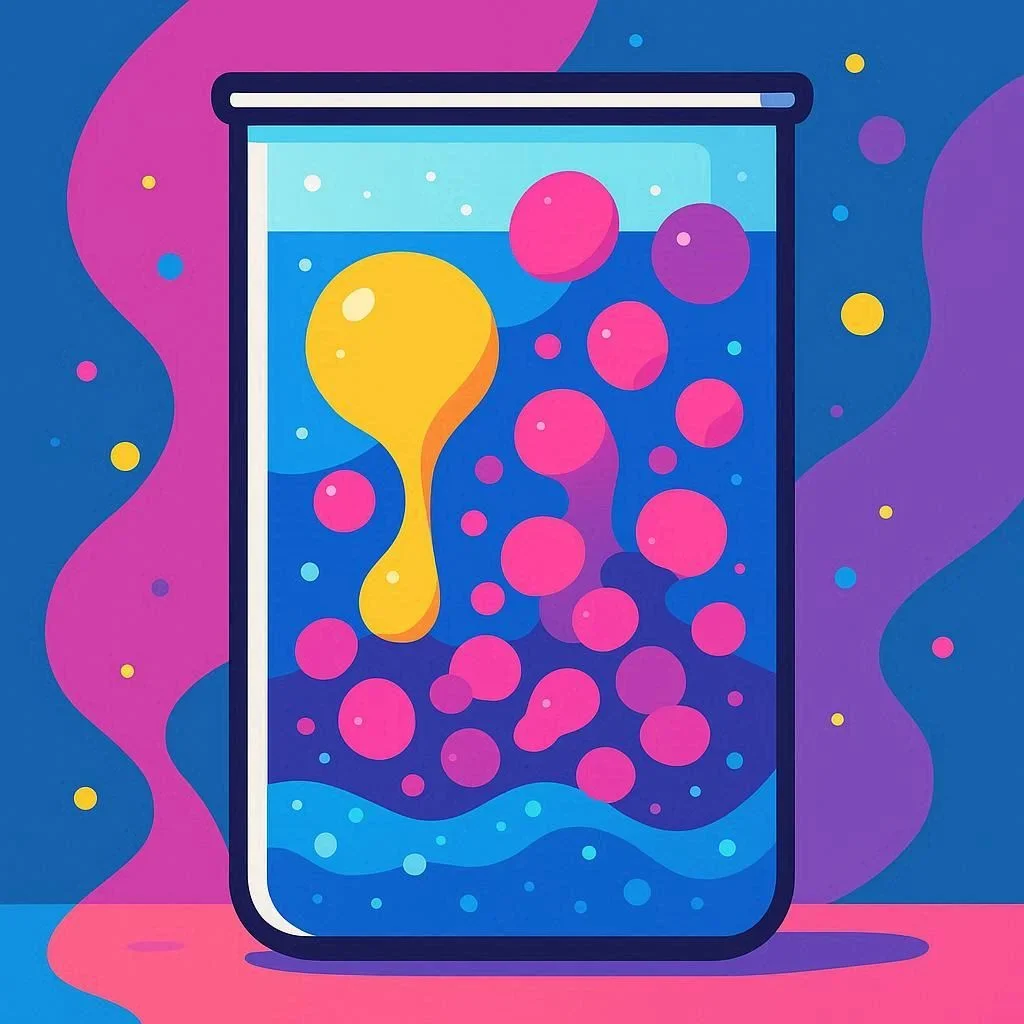

The Walking Water Rainbow Experiment is a popular classroom demonstration that shows how gravity, capillary action, and simple liquids can create a moving spectrum of colors. By simply placing different colored water in a row of transparent tubes and adding a small amount of dish detergent, students and hobbyists see a rainbow travel from one cup to another without any pumps or electronics. This accessible setup not only teaches basic physics and chemistry concepts but also sparks curiosity in learners of all ages.
📱 Download Our Apps on Google Play
Click any app below to install it from the Google Play Store.
What Is the Walking Water Rainbow Experiment?
The core idea of the Walking Water Rainbow Experiment is to channel colored water from one cup to another using a long, narrow tube. The effect relies on Capillary Action, a process by which liquid moves up narrow spaces against gravity. By attaching a sturdy glass or plastic tube to two cups—one containing colored water and the other with plain water—a colored front will slowly “walk” along the tube until it reaches the other cup. The name also hints at the optical phenomenon of color mixing, where multiple hues blend in the liquid medium to form a rainbow that you can actually see sugarlessly.
Science Behind the Experiment
The Walking Water Rainbow Experiment is a blend of simple physics and chemistry. The key principles are Capillarity, gravity, and diffusion. When you introduce a small amount of food‑grade dish soap into the water, you create a surface tension gradient that draws liquid up the tube. The tube’s narrow diameter forces the water to spread across its surface, creating a capillary rise that, due to gravity, pulls the liquid forward. As the colored water moves, its molecules slowly intermingle with the plain water, resulting in a gradient of hues that resembles a traveling rainbow. Humans can even see the transition of colors without the help of a spectroscope—a testament to the human eye’s sensitivity to subtle changes in light wavelengths.
Educational experts note that the Walking Water Rainbow Experiment can help students visualize several concepts at once. For instance, it demonstrates how Color Mixing works in a practical environment and how gravity can be counteracted with surface tension. Scientists and teachers alike use the demonstration to illustrate that scientific learning can be both visual and tactile, which can significantly improve retention and enthusiasm in the learning environment.
Step‑By‑Step Instructions
- Gather Materials: You will need six plastic cups, a clear plastic or glass tube that is at least 18 inches long, water, food‑grade dish soap, several dropper bottles or pipettes, and five different colored liquid food dyes (or household liquids like Blue Jell‑O, Red Hot Sauce, Green Apple juice, Yellow Grape soda, and Orange Orange juice). Additionally, a small plastic straw or a capillary suction device can help connect the tube to the cups.
- Prepare Colored Solutions: Add 1–2 ml of your chosen food dye to 100 ml of water in each of the five colored cups. Stir until the color is homogeneously distributed.
- Form the Tube System: Place the tube between two cups. One end of the tube goes into a cup of plain water. The opposite end will connect to cups containing the colored solutions. Secure the tube with a light clamp or stick it in place so it doesn’t shift.
- Inoculate the Tube: Pour about 10 ml of dish soap into the plain water cup at the tube’s mouth. This will lower the surface tension and facilitate upward travel.
- Watch the Rainbow! The colored front should start moving through the plain water via the tube as capillary action pushes the dye upward. Observe how the colors mingle at the interface—over time, you’ll see a faint gradient that looks like a rainbow moving.
- Time the Experiment: Use a stopwatch to log how long it takes for the color to travel from one cup to another. This gives insight into the combined effect of fluid viscosity, tube diameter, and gravity.
- Repeat with Variations: Try using a narrower tube or adding extra drops of detergent to increase speed. You can also use a tube with different diameters to compare gradients.
- Clean Up: Discard the used water—or pour it into a waste container—and wash the tubes and cups thoroughly with soap and warm water. Store any unused dye and detergent in sealed containers for future experiments.
Safety Tips and Variations
Although the experiment uses simple kitchen supplies, safety guidelines are essential. All chemicals used are food‑grade, but it’s prudent to keep the setup away from small children who might accidentally ingest the dyes. Provide a well‑ventilated area to ensure that any detergent fumes do not accumulate. If you are conducting the experiment outdoors, bring a small tarp or shade to shield the setup from direct sunlight which can affect the temperature and, consequently, the rate of capillary rise.
Variations of the Walking Water Rainbow Experiment can expand its educational value. For instance, you can replace the plastic tube with a glass pipette or use a series of U‑shaped tubes to create a continuous loop. Another popular twist involves adding a small amount of salt to the plain water cup to increase surface tension, thereby speeding up the upward travel of the colored front. Experimenters on National Geographic have suggested a version that incorporates a small amount of surfactant to illustrate crowding effects in capillaries. Creating a “stand‑alone” setup where the colored water doesn’t need a second plain cup is also possible by using an inverted U‑tube and letting gravity take charge.
Scientists recommend measuring the time it takes for the colored front at various tube diameters and plotting the data. This empirical approach provides hands‑on learning about linear diffusion and variable parameters, exactly what real laboratories investigate using complex instrumentation.

100+ Science Experiments for Kids
Activities to Learn Physics, Chemistry and Biology at Home
Buy now on Amazon
Advanced AI for Kids
Learn Artificial Intelligence, Machine Learning, Robotics, and Future Technology in a Simple Way...Explore Science with Fun Activities.
Buy Now on Amazon
Easy Math for Kids
Fun and Simple Ways to Learn Numbers, Addition, Subtraction, Multiplication and Division for Ages 6-10 years.
Buy Now on Amazon🚀 Try These Free Android Apps
Download these useful apps directly from the Google Play Store.