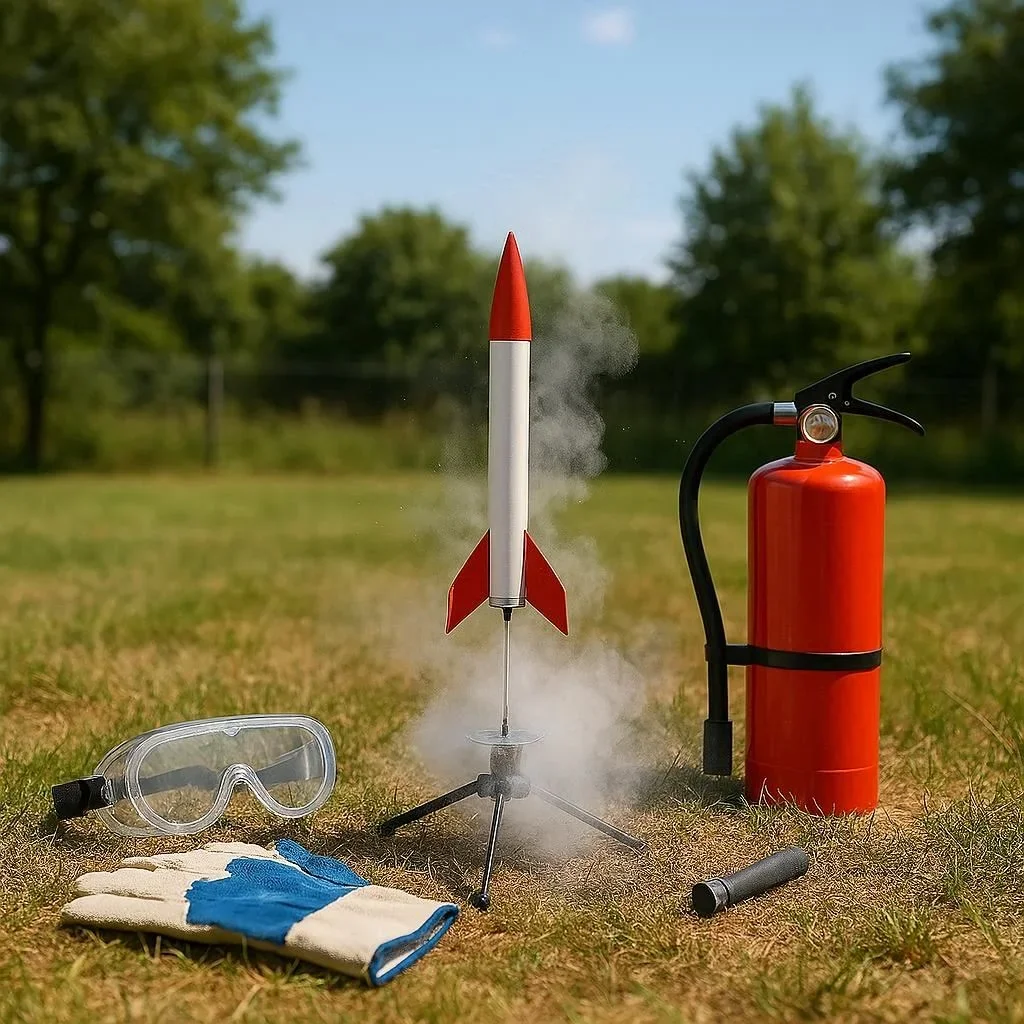

When you hear the term Baking Soda Rocket, it evokes an image of a cheerful, homemade space adventure that’s perfect for curious families and science teachers alike. This nifty experiment combines everyday kitchen ingredients with fundamental chemical principles to create a safe, exhilarating launch that demonstrates the power of reaction and pressure, all while keeping safety at the forefront.
📱 Download Our Apps on Google Play
Click any app below to install it from the Google Play Store.


Why a Baking Soda Rocket Works
At its heart, the Baking Soda Rocket relies on a simple yet elegant chemical reaction between Sodium Bicarbonate (baking soda) and an acid—usually vinegar. When they combine, carbon dioxide gas is released rapidly as a by‑product:
NaHCO3 + CH3COOH → CO2 + H2O + NaCH3COO
Because the reaction is exothermic and produces gas faster than the surrounding air can escape, pressure builds inside a confined container until it forces the rocket to launch. This basic principle—similar to the way an aerosol can eject content—demonstrates elementary concepts in physics, chemistry, and engineering.
Materials and Tools You Need
Here’s a handy checklist that keeps things simple yet effective for a safe launch:
- 1–2 tsp baking soda (Sodium Bicarbonate)
- 50 ml vinegar (acetic acid) or a small amount of lemon juice for a different flavor
- Small plastic bottle or a rolled‑up paper tube to serve as the rocket’s body (500 ml soda bottle works well)
- Paper or cardstock for the fins and tail (optional but adds stability)
- Protective goggles and gloves
- A flat, open outdoor area or a clear driveway
- Plastic bag or an old towel to collect the debris
Step-by-Step Instructions
- Prep the Rocket: If you’re using a bottle, remove the cap and add a small plug of cotton or a tight elastic around the neck to help manage the gas buildup.
- Seal the Bottom: Fold the bottom of the bottle in a paper cup shape to create a small barrier that keeps some of the gas inside until launch.
- Add the Fuel: Spoon the baking soda into the bottle. No more than 2 tsp to keep pressure manageable.
- Load the Acid: If you’re using vinegar, pour it slowly into the bottle and carefully close the lid. Avoid adding too much at once to reduce the risk of an explosive overflow.
- Launch! Place the rocket on a level surface, turn it upside down, and quickly lift the bottle so the gas escapes and the rocket rockets upward.
- Aftermath: Once the launch is complete, safely discard the used container in a sink or a chemical safe container.
Safety Tips and Best Practices
Even though this experiment uses household items, safety remains paramount. Follow these guidelines:
- Always wear goggles and gloves to protect against splashes.
- Conduct the launch outdoors to avoid indoor hazards and ensure proper ventilation.
- Keep children at a safe distance—ideally 30 ft—from the launch site.
- Check for obstructions like power lines or buildings before launching.
- Dispose of the reaction mixture in a sink with plenty of running water.
Experiment Variations and Extensions
To maintain the excitement and deepen the learning, try these fun variations:
- Different Acids: Use lemon juice or citric acid instead of vinegar for a tangier experiment.
- Rocket Size: Use smaller tubes for shorter launches or larger containers for greater height, but adjust the amount of baking soda accordingly.
- Stabilizers: Attach fins made from cardboard to help the rocket travel in a straight line. Shape the tail of the container into a fin for extra lift.
- Data Collection: Record the launch height or time using a stopwatch, or measure the volume of gas produced.
- Mind the Environment: Conduct a brief discussion on how carbon dioxide in the atmosphere is produced and its broader environmental significance.
When exploring these variations, consult reputable resources for reference designs and safety protocols, such as the Science Buddies library or the National Geographic Chemistry site for research papers and teaching ideas.
Conclusion and Call to Action
Launching a Baking Soda Rocket isn’t just about reaching a few feet of height; it’s a gateway to talking about chemical reactions, safe experiment design, and a hands‑on approach to science education. By combining simple household items with clear safety steps, families and classrooms can spark real curiosity and deepen their appreciation for the amazing forces that surround us. Gather your materials, set your safety gear, and let the launch remind everyone—science can be thrilling, approachable, and absolutely safe when you know how to do it right.
Take the plunge—build your own Baking Soda Rocket today and share your launch photo or experiment results with us!
Frequently Asked Questions
Q1. How does a Baking Soda Rocket work?
A Baking Soda Rocket works through a simple chemical reaction between sodium bicarbonate (baking soda) and an acid such as vinegar. The reaction produces carbon dioxide gas rapidly, which builds pressure inside the sealed container. When the pressure exceeds the container’s structural limit, the gas forces the rocket upward, creating a brief launch.
Q2. What materials do I need for the rocket?
You’ll need 1–2 teaspoons of baking soda, about 50 ml of vinegar or lemon juice, a 500 ml plastic soda bottle or a paper tube, paper fins (optional), protective goggles and gloves, and a clear outdoor area for launch.
Q3. Is it safe to do at home?
Yes, if you follow safety guidelines. Wear goggles, gloves, and launch outdoors where there’s no one nearby. Keep the launch site free of power lines and other obstructions, and dispose of the reaction mixture safely in a sink with running water.
Q4. Can I control how high it goes?
You can adjust the launch height by changing the amount of baking soda, the volume of acid, or using a larger or smaller container. Larger containers generally give higher launches, but you’ll need to scale the soda amount accordingly. Adding fins can improve stability and may affect flight distance.
Q5. What variations can I try to keep the experiment interesting?
Try using different acids like lemon juice or citric acid, experiment with rocket size, add fins for better stability, or collect data on launch height and time. You can also discuss how carbon dioxide is released and its environmental impact, making the experiment both fun and educational.
Related Articles

100+ Science Experiments for Kids
Activities to Learn Physics, Chemistry and Biology at Home
Buy now on Amazon
Advanced AI for Kids
Learn Artificial Intelligence, Machine Learning, Robotics, and Future Technology in a Simple Way...Explore Science with Fun Activities.
Buy Now on Amazon
Easy Math for Kids
Fun and Simple Ways to Learn Numbers, Addition, Subtraction, Multiplication and Division for Ages 6-10 years.
Buy Now on Amazon🚀 Try These Free Android Apps
Download these useful apps directly from the Google Play Store.