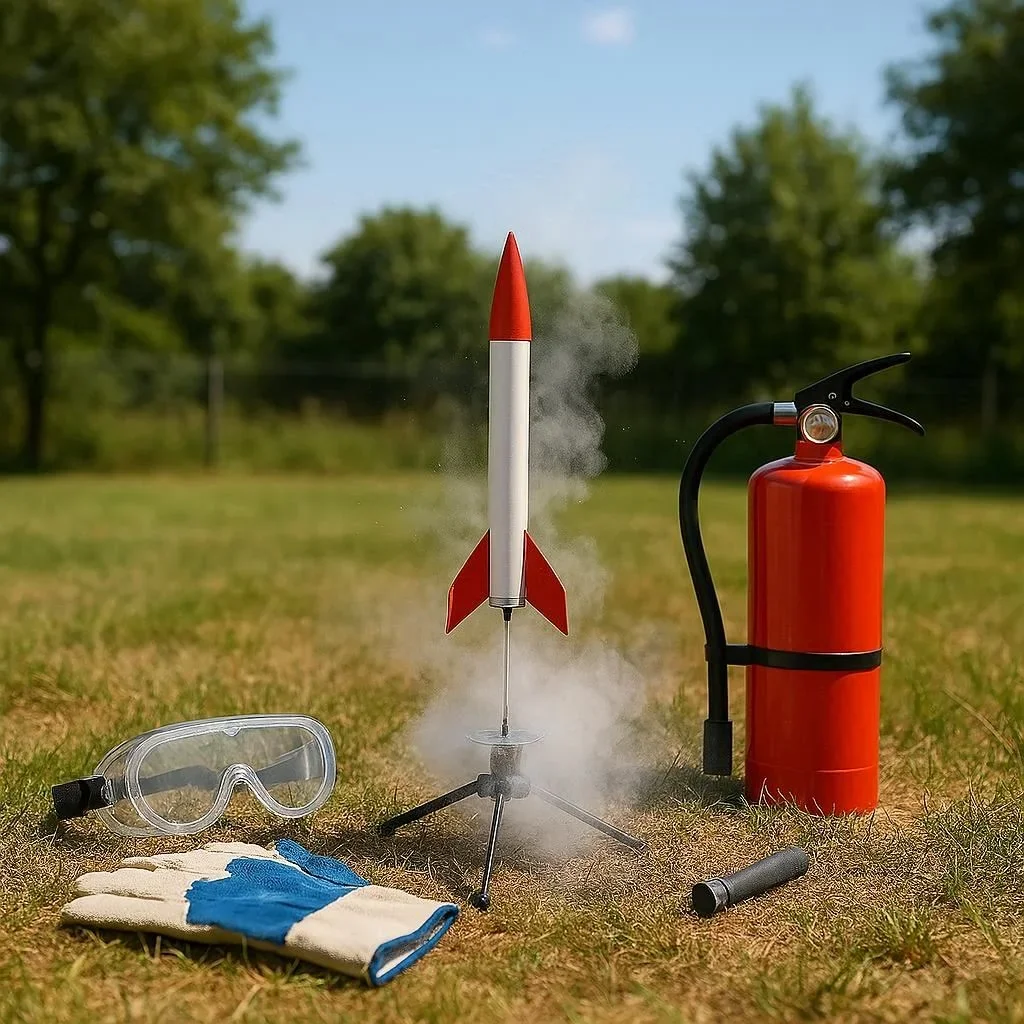

When you launch a simple balloon along a taut string, you’re witnessing a vivid demonstration of physics in action. The Balloon Rocket Experiment showcases the fundamental principle of action and reaction, making abstract concepts concrete for students and hobbyists alike. In the first few minutes of reading, you’ll discover how Newton’s third law powers this inexpensive yet powerful activity, why it belongs in every STEM classroom, and how to extend the experiment for deeper scientific inquiry.
Understanding Action and Reaction
The core of the Balloon Rocket Experiment is Newton’s third law: for every action, there is an equal and opposite reaction. When air rushes out of the balloon’s narrow opening, it pushes backward on the escaping air molecules. The air, in turn, pushes forward on the balloon, propelling it along the string. This simple exchange of forces illustrates how rockets launch, how submarines maneuver, and why a balloon can glide across a room without any external propulsion.
Materials You’ll Need
- One latex balloon (standard party size works best)
- Length of lightweight string or fishing line (2–3 meters long)
- Two sturdy markers or tape rolls to secure the string at each end
- Straw (a straight drinking straw, not a bendy one)
- Scissors and a ruler (optional, for measuring distance)
- Notebook for observation notes
All items are inexpensive and can be found at a typical school supply store or online retailer. The experiment is safe for elementary students under adult supervision.
Step‑by‑Step Procedure
- Attach the string securely between two fixed points (e.g., the backs of two chairs) so it is taut and horizontal.
- Thread the straw onto the string, ensuring it can slide freely without friction.
- Inflate the balloon by blowing air into it, but do not tie the end. Clamp the balloon’s opening with a clothespin or pinch it between your fingers.
- Affix the balloon to the straw using tape, aligning the balloon’s nozzle with the straw’s direction of travel.
- When ready, release the clamp so the air rushes out of the balloon’s opening. Observe the balloon rocket glide along the string.
- Record the distance traveled and the time taken. Repeat the trial several times to ensure consistency.
Students can use a stopwatch and a ruler to calculate speed, giving them real quantitative data to analyze.
Analyzing the Results
After the runs, compare the measured speeds with the theoretical predictions based on the mass of the balloon, the volume of air expelled, and the length of the straw. The relationship is governed by the equation F = ma, where the thrust force (F) results from the rapid expulsion of air, and “m” is the combined mass of the balloon and straw system. Encourage learners to graph speed versus balloon size or to experiment with different straw diameters to see how friction influences performance.
For deeper insight, consult the NASA rocket science lesson, which explains how thrust works in real rockets and parallels the balloon experiment’s mechanics.
Extensions and Variations
Once the basic experiment is mastered, you can explore several variations:
- Angle Launch: Raise one end of the string to create an inclined plane, demonstrating how launch angle affects range.
- Weighted Balloon: Attach small weights to the balloon to study how mass influences acceleration.
- Multiple Balloons: Use two balloons on the same straw to investigate combined thrust.
- Data Logging: Use a motion sensor or video analysis app to capture precise velocity curves.
These activities foster critical thinking and align with how a balloon rocket works, reinforcing the real‑world relevance of the experiment.
Connecting to Curriculum Standards
The Balloon Rocket Experiment satisfies numerous educational standards, including NGSS performance expectations for middle school physical science. It addresses the engineering design process, data collection, and the development of explanatory models. Teachers can integrate this activity into units on forces, motion, and energy, providing a hands‑on complement to textbook theory.
For educators seeking additional resources, the NC State Physics Department offers lesson plans and assessment rubrics that align with state standards.
Conclusion
The Balloon Rocket Experiment is more than a classroom gimmick; it is a powerful gateway to understanding action and reaction, the fundamentals of propulsion, and the scientific method. By combining inexpensive materials, clear instructions, and rigorous data analysis, educators and parents can inspire curiosity and confidence in budding scientists.
Ready to launch your own investigation? Gather the supplies, follow the steps, and share your results with a community of learners. For more hands‑on STEM ideas, explore our library of projects and keep the momentum of discovery soaring!
Frequently Asked Questions
Q1. What is the Balloon Rocket Experiment?
The Balloon Rocket Experiment demonstrates Newton’s third law by using a deflating balloon to propel a straw along a string. Air rushes out of the balloon’s opening, creating an equal and opposite reaction that moves the balloon forward. It’s a simple, low‑cost activity that visualizes action‑and‑reaction forces.
Q2. Which scientific principle does the experiment illustrate?
The experiment illustrates Newton’s third law of motion: for every action there is an equal and opposite reaction. The expelled air provides the action force, and the balloon experiences the reaction force that pushes it along the string. This principle underlies real‑world propulsion systems, such as rockets.
Q3. What materials are needed for a basic setup?
You need a standard latex balloon, a length of lightweight string or fishing line, a straight drinking straw, two markers or tape rolls to secure the string, and optional scissors, a ruler, and a notebook for data. All items are inexpensive and easy to find at school supply stores or online.
Q4. How can I measure the balloon’s speed?
Measure the distance the balloon travels along the string and the time it takes using a stopwatch. Speed is calculated by dividing distance by time (v = d/t). For greater accuracy, you can use a motion sensor or video analysis app to capture velocity over time.
Q5. What extensions can deepen the investigation?
Try variations such as launching at an angle, adding small weights to the balloon, using multiple balloons, or changing straw diameter to study friction. You can also log data with sensors or graph speed versus balloon size to explore relationships between mass, thrust, and acceleration.