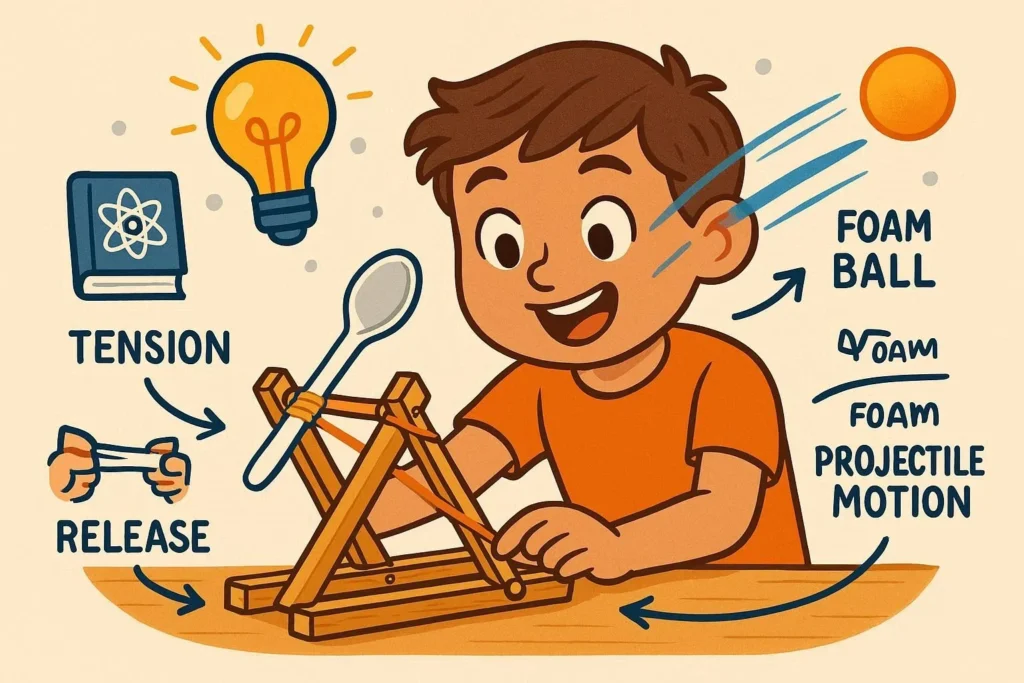

Ever wondered how a simple marshmallow can launch a delicious, fluffy treat across the room? It’s not just luck; it’s physics in action! This project offers a fantastic opportunity to explore fundamental principles of projectile motion – gravity, air resistance, and the power of design. It’s a hands-on learning experience that blends creativity with scientific understanding, fostering problem-solving skills and a genuine appreciation for engineering concepts.
Let’s dive into how you can build your own marshmallow catapult and, more importantly, how to analyze its performance using basic physics principles. This isn’t just about launching marshmallows; it’s about understanding *why* they launch the way they do – and learning valuable skills that will benefit you in various projects throughout your life.
The Science Behind the Launch
Before we begin construction, let’s briefly touch upon the physics behind projectile motion. A projectile is any object launched into the air with a significant initial velocity. The key factors determining its trajectory are gravity and air resistance – also known as drag. Gravity pulls the marshmallow downwards, constantly accelerating it. Air resistance opposes the motion, slowing it down. The steeper the launch angle, the greater the air resistance, and thus, the shorter the distance the marshmallow travels.
The coefficient of restitution (COR) is a crucial element to consider. This value represents how much energy is conserved during the bounce-back phase of the marshmallow’s flight. A higher COR means that the marshmallow retains more energy upon its return, leading to a longer and more dramatic launch.
Understanding Air Resistance – The Drag Factor
Air resistance isn’t just about air; it’s about how the air interacts with the object. The shape of the marshmallow significantly impacts drag. A streamlined shape minimizes air resistance compared to a rough, irregular one. A wider base and a more aerodynamic design will generally result in a longer, more controlled launch.
Furthermore, wind speed plays a crucial role. A headwind will push the marshmallow downwards, reducing its range, while a tailwind will increase it. Understanding these factors is vital for optimizing your catapult’s performance. Experimenting with different angles and launching speeds will help you determine how these variables affect the trajectory.
Designing Your Marshmallow Catapult – A Step-by-Step Guide
Now, let’s move on to building! Here’s a breakdown of the steps involved in constructing your own marshmallow catapult:
- Materials: You’ll need a sturdy cardboard tube (toilet paper or paper towel roll works well), a marshmallow, tape, scissors, and a ruler.
- Construction: Cut a rectangular opening at one end of the tube. This will serve as the launch point. Securely tape the cardboard tube to the base of the opening.
- The Arm: Create a simple arm using cardboard strips or popsicle sticks. This arm should extend beyond the opening and be positioned to catch the marshmallow.
- The Pivot Point: A small hole in the center of the arm allows the marshmallow to pivot freely. Ensure this hole is large enough for the marshmallow to easily enter.
- Testing & Adjustment: Launch your catapult! Observe its performance and make adjustments as needed – increasing the angle or adding a slight curve to the arm can dramatically improve launch distance.
Analyzing Your Catapult’s Performance – Measuring Success
Simply launching a marshmallow isn’t enough; we need to quantify its performance. Here are some key metrics you can measure:
- Range: The horizontal distance the marshmallow travels when launched.
- Velocity: The speed at which the marshmallow is traveling. You can estimate this by measuring the time it takes for the marshmallow to reach a certain point and then calculating its velocity using the formula: Velocity = Distance / Time.
- Launch Angle: The angle at which the marshmallow is launched. This is crucial for understanding how air resistance affects the trajectory. A steeper launch angle generally results in a longer range, but also increases the risk of the marshmallow hitting the ground.
- Bounce Rate: How often the marshmallow bounces back after impact. A higher bounce rate indicates a more efficient return.
You can use simple tools like a measuring tape and a protractor to accurately record these measurements. Consider creating a data table to organize your observations – this will help you identify trends and patterns in your catapult’s performance.
Advanced Concepts & Experimentation
Beyond the basics, there’s plenty more to explore! Consider experimenting with different materials for the arm and launch point. Try adding weights to the marshmallow to increase its momentum. You could also investigate the effects of humidity on the marshmallow’s performance – a damp marshmallow will likely travel further than a dry one.
- Air Density: The density of air significantly impacts projectile motion. Higher air density results in lower velocities and shorter ranges.
- Drag Coefficient: This value, often represented by ‘Cd’, describes the resistance to airflow. A higher Cd means greater drag.
- Wing Shape: For more complex catapult designs, incorporating wing shapes can significantly improve lift and range.