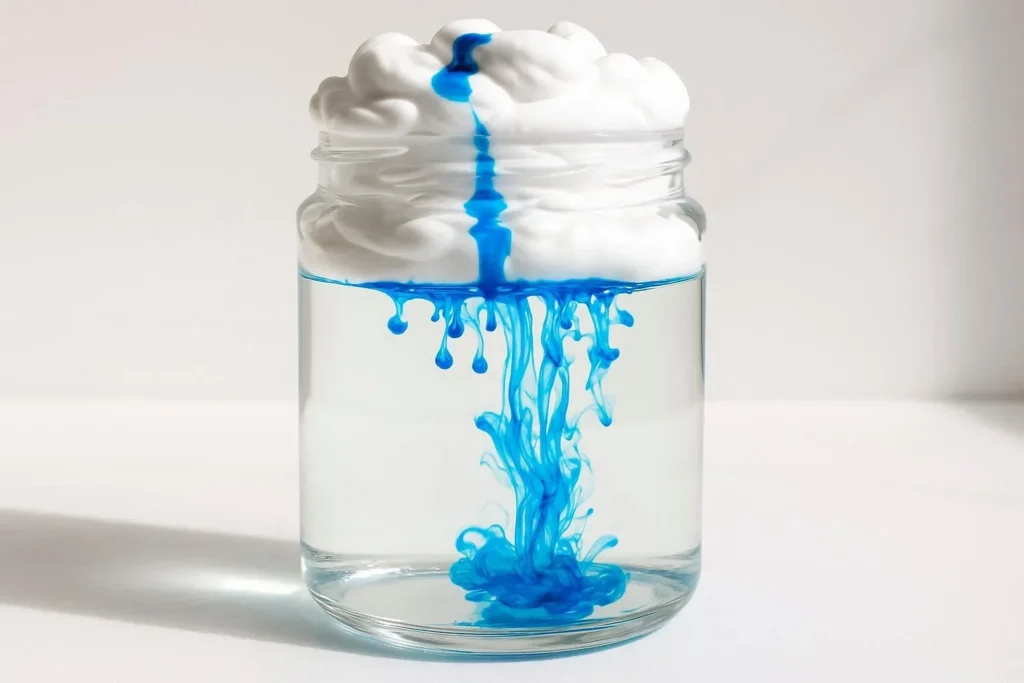

Hydrogen Peroxide Foam, often called Elephant’s Toothpaste, is a dazzling demonstration that turns a simple household chemical into a towering, frothy geyser. The reaction is quick, visually striking, and a perfect way to introduce students and curious hobbyists to the fundamentals of chemical kinetics and catalysis. In this guide we’ll walk through the science, the step‑by‑step procedure, the safety measures you must observe, and the reasons this experiment is a staple in science classrooms worldwide.
What Is Hydrogen Peroxide Foam?
At its core, Hydrogen Peroxide Foam is a rapid decomposition of hydrogen peroxide (H₂O₂) into water (H₂O) and oxygen gas (O₂). When a catalyst—most commonly potassium iodide (KI) or yeast—is added, the reaction accelerates dramatically, releasing a large volume of oxygen that expands the liquid into foam. The foam’s frothy texture and bright color make it resemble toothpaste being squeezed from a giant tube, hence the nickname Elephant’s Toothpaste.
Materials and Setup
Gathering the right materials is essential for a successful and safe experiment. Below is a concise list of what you’ll need:
- 3–6 % hydrogen peroxide solution (the higher the concentration, the more vigorous the foam)
- Liquid dish soap (to trap the oxygen and create foam)
- Food coloring (optional, for visual flair)
- Potassium iodide solution or a packet of dry yeast (catalyst)
- Large plastic or glass container (at least 1 liter capacity)
- Safety goggles and lab coat or protective clothing
- Gloves (nitrile or latex)
- Spatula or stir stick
- Timer or stopwatch
- Trash bag or waste container for disposal
Before you begin, set up your experiment in a well‑ventilated area or outdoors. Place the container on a stable surface and keep a fire extinguisher or a bucket of water nearby in case of accidental splashes.
Step‑by‑Step Procedure
Follow these steps to create a spectacular foam eruption while maintaining safety:
- Prepare the container. Pour the hydrogen peroxide into the container, filling it about one‑third of the way. Add a few drops of food coloring if you want a more vivid display.
- Add dish soap. Gently stir in a generous splash of liquid dish soap. The soap molecules will capture the oxygen bubbles, forming foam.
- Mix the catalyst. In a separate small cup, dissolve the potassium iodide in a tablespoon of water or activate the yeast with warm water. This solution will be added to the main container.
- Initiate the reaction. Quickly pour the catalyst solution into the container and step back. The reaction will start almost immediately, producing a rapid rise of foam that can reach the top of the container.
- Observe and record. Use a timer to note how long the foam lasts and how high it reaches. Capture photos or videos for documentation.
- Clean up. Once the foam subsides, dispose of the mixture in a trash bag. Do not pour it down the drain, as the high concentration of hydrogen peroxide can damage plumbing.
For a deeper understanding of the reaction mechanism, you can read more on the Wikipedia page for hydrogen peroxide or consult the CDC safety guidelines.
Why It Works: The Science Behind It
The decomposition of hydrogen peroxide is a classic example of a redox reaction. In the presence of a catalyst, the reaction follows this simplified equation:
2 H₂O₂ → 2 H₂O + O₂↑
The catalyst provides an alternative reaction pathway with a lower activation energy, allowing the reaction to proceed at a much faster rate. The oxygen gas produced expands rapidly, and the soap molecules stabilize the gas bubbles, creating the characteristic foam. The color of the foam can be altered by adding food coloring, which does not interfere with the reaction but enhances visual appeal.
To explore the kinetics further, you can experiment with different concentrations of hydrogen peroxide. Higher concentrations yield more oxygen and a larger foam volume, but they also increase the risk of splashing. The Science.org article on catalysis provides a solid theoretical background for those interested.
Safety Precautions and Cleanup
While the experiment is generally safe when conducted with proper precautions, hydrogen peroxide can cause skin irritation and eye damage at higher concentrations. Follow these safety steps:
- Wear safety goggles, gloves, and a lab coat or protective clothing.
- Conduct the experiment in a well‑ventilated area or outdoors.
- Keep a fire extinguisher or a bucket of water nearby.
- Never touch the foam with bare hands; it can be hot if the reaction is vigorous.
- After the foam has settled, place the mixture in a sealed plastic bag and dispose of it in a trash bin. Do not pour it down the drain.
For additional safety information, consult the National Geographic science feature on hydrogen peroxide.
Extending the Experiment
Once you master the basic setup, you can explore variations that deepen your understanding of chemical reactions:
- Temperature effects. Warm the hydrogen peroxide slightly before adding the catalyst to observe how temperature influences reaction rate.
- Different catalysts. Try manganese dioxide or copper sulfate as alternative catalysts and compare the foam height and duration.
- Concentration gradients. Mix solutions of varying hydrogen peroxide concentrations in separate containers to see how foam production scales.
- Educational outreach. Use the experiment as a teaching tool for topics such as reaction kinetics, catalysis, and safety protocols.
These extensions not only make the experiment more engaging but also reinforce key scientific concepts.
Conclusion and Call to Action
Hydrogen Peroxide Foam is more than a flashy demonstration; it’s a gateway to the exciting world of chemistry. By following the steps above, you can safely create a spectacular foam eruption that illustrates the power of catalysts and the beauty of chemical reactions. Remember to prioritize safety, respect the materials, and enjoy the learning process.
Try the experiment today, share your results with friends or classmates, and inspire others to explore the wonders of science!
Frequently Asked Questions
Q1. What is Hydrogen Peroxide Foam?
Hydrogen Peroxide Foam, also known as Elephant’s Toothpaste, is a rapid decomposition of hydrogen peroxide into water and oxygen gas. When a catalyst such as potassium iodide or yeast is added, the reaction accelerates, producing a large volume of oxygen that expands the liquid into foam. The foam’s frothy texture and bright color make it resemble toothpaste being squeezed from a giant tube.
Q2. What materials do I need for the experiment?
You’ll need 3–6 % hydrogen peroxide, liquid dish soap, optional food coloring, a catalyst (potassium iodide solution or dry yeast), a large container, safety goggles, gloves, a lab coat, a stir stick, a timer, and a trash bag for disposal. It’s best to perform the experiment outdoors or in a well‑ventilated area.
Q3. How can I keep the experiment safe?
Wear protective gear, work in a ventilated space, keep a fire extinguisher or bucket of water nearby, and never touch the foam with bare hands. After the reaction, seal the mixture in a plastic bag and dispose of it in a trash bin—do not pour it down the drain.
Q4. Why does the foam rise so high?
The catalyst lowers the activation energy, causing hydrogen peroxide to decompose quickly into water and oxygen gas. The oxygen bubbles are trapped by the soap, forming foam that expands rapidly and pushes the liquid upward.
Q5. Can I use other catalysts besides potassium iodide or yeast?
Yes, manganese dioxide or copper sulfate can also act as catalysts, though the reaction rate and foam volume may differ. Experimenting with different catalysts can help illustrate how catalysts influence reaction kinetics.