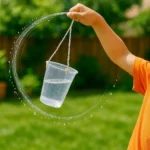
When students first encounter the concept of refraction of light, the phenomenon seems almost magical: a straight beam suddenly bends as it passes from air into water or a glass prism. This bending is not a trick but a predictable outcome governed by Snell’s law, the refractive index of each medium, and the wavelength of the light. By designing hands‑on experiments with water containers and prisms, educators can transform abstract theory into observable reality, reinforcing the physics behind everyday optics such as eyeglasses, cameras, and fiber‑optic cables. In the sections that follow, we will cover the scientific background, step‑by‑step procedures, safety considerations, and ways to analyze the data for a deeper understanding of light behavior.
Understanding the Refraction of Light
Refraction occurs whenever light travels between two substances with different optical densities. The speed of light slows down in denser media, causing the wavefront to change direction. The relationship is captured by Snell’s law: n₁ sinθ₁ = n₂ sinθ₂, where n represents the refractive index. Water, for example, has a refractive index of about 1.33, while typical crown glass prisms range from 1.51 to 1.55. This difference explains why a straw appears broken at the surface of a glass of water. For a more detailed theoretical overview, consult the Wikipedia article on Refraction. Understanding these fundamentals prepares learners to predict how light will behave in the upcoming experiments.
Setting Up a Water Refraction Experiment
The water experiment offers a low‑cost, low‑risk entry point for observing light bending. You will need a clear rectangular tank, a laser pointer (preferably red for safety), a protractor, a ruler, and a darkened room to enhance visibility. Follow these steps:
- Fill the tank with water to a depth of at least 10 cm.
- Secure the laser pointer on a stable stand so that the beam strikes the water surface at a known angle (e.g., 30° from the normal).
- Place a white screen or sheet of paper behind the tank to capture the refracted beam.
- Mark the incident and refracted rays on the screen, then measure the angles using the protractor.
- Calculate the experimental refractive index using Snell’s law and compare it with the accepted value of 1.33.
Data collection should be repeated for at least three different incident angles to verify consistency. Errors often arise from surface ripples, misalignment of the laser, or inaccurate angle measurement, so emphasize careful setup and repeat trials.
Prism Experiments and Dispersion
Unlike water, a glass prism not only refracts light but also separates it into its component colors—a process known as dispersion. This occurs because the refractive index varies slightly with wavelength (a phenomenon described by the material’s dispersion relation). For this experiment, you will need a triangular prism, a white light source or a bright LED, a screen, and a ruler.
Arrange the light source so that the beam enters one face of the prism at an angle near the angle of minimum deviation. On the opposite side, observe a spectrum projected onto the screen. Measure the distance between the red and violet edges; using geometry, you can estimate the angular spread and relate it to the prism’s refractive index for each color. The NIST optical measurement page offers detailed guidance on wavelength‑dependent refractive indices, which can enrich your analysis.
Analyzing Results and Common Errors
After completing both experiments, students should compile their angle measurements into a table and plot sin θ₁ versus sin θ₂ for water, and sin θ₁ versus sin θ₂ for each wavelength in the prism experiment. The slope of each line corresponds to the ratio of refractive indices, providing a visual confirmation of Snell’s law. Common pitfalls include:
- Parallax errors when reading protractor scales.
- Temperature fluctuations affecting water density and thus its refractive index.
- Impurities or bubbles in the water, which scatter light and obscure the beam.
- Using a low‑quality prism that introduces internal stresses, altering the dispersion pattern.
Addressing these issues improves data reliability and reinforces scientific rigor. For further context on experimental best practices, the NASA optics page offers valuable insights into accurate optical measurements in research settings.
Extending the Inquiry
Educators can expand the inquiry by integrating concepts such as total internal reflection, critical angles, and fiber‑optic light transmission. Comparing the refractive index of water with that of other liquids (e.g., glycerin or mineral oil) highlights how molecular composition influences optical density. Moreover, linking the experiments to real‑world applications—like lens design in cameras, corrective eyewear, or underwater communication—helps students appreciate the relevance of the refraction of light in technology.
Conclusion
By systematically studying the refraction of light using water and prisms, learners gain hands‑on experience with fundamental optics, develop critical data‑analysis skills, and connect theory to everyday phenomena. These experiments are adaptable for classroom labs, after‑school clubs, or home science projects, offering an engaging pathway to explore physics.
Ready to deepen your understanding? Dive into more refraction of light activities, video tutorials, and printable worksheets on our site—your next discovery is just a click away!