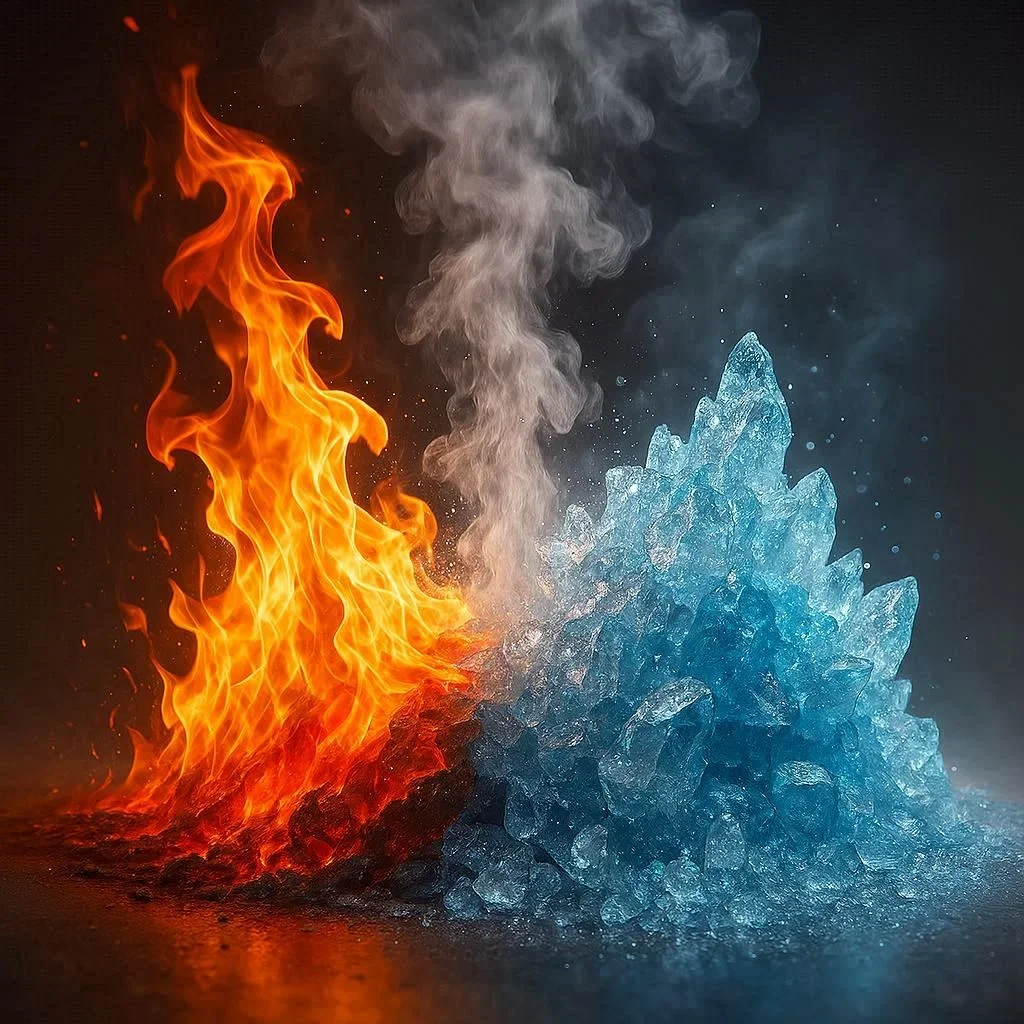

Rock salt crystals are a fascinating way to explore basic principles of chemistry, especially the phenomenon of freezing point depression. By dissolving common table salt (sodium chloride) in water and allowing the solution to evaporate slowly, you can grow beautiful, translucent crystals that reveal the underlying physics of solute–solvent interactions. This hands‑on experiment not only produces striking visuals but also provides a tangible demonstration of how adding a solute lowers the freezing point of a liquid, a key concept in thermodynamics and colligative properties.
Understanding Freezing Point Depression
Freezing point depression occurs when a solute, such as NaCl, is added to a solvent like water. The solute particles interfere with the formation of the ordered lattice structure that defines the solid phase, requiring a lower temperature for the solvent to freeze. The magnitude of the depression depends on the number of solute particles, not their identity, which is why the effect is considered a colligative property. For a typical 10 % salt solution, the freezing point drops from 0 °C to about –6 °C, illustrating how even modest concentrations can significantly alter phase behavior.
Materials and Safety Precautions
Before you begin, gather the following items:
- Table salt (sodium chloride)
- Distilled or de‑ionized water
- Heat‑resistant glass or plastic container
- Stirring rod or spoon
- Clear glass or plastic jar for crystal growth
- Paper towels and a clean work surface
- Protective gloves and safety goggles (recommended)
Safety first: While sodium chloride is generally safe, handling hot water and maintaining a clean workspace helps prevent slips or burns. Always wear gloves and goggles if you plan to heat the solution.
Step‑by‑Step Guide to Growing Rock Salt Crystals
Follow these steps to create your own rock salt crystals and observe freezing point depression in action:
- Dissolve the Salt: Heat 500 ml of distilled water to near boiling. Add 50 g of table salt while stirring until the solution is clear and no undissolved crystals remain.
- Cool the Solution: Allow the hot solution to cool to room temperature. As it cools, the water’s ability to hold dissolved salt decreases, setting the stage for crystal formation.
- Initiate Crystallization: Place the cooled solution in a clean jar. To encourage nucleation, gently tap the jar or insert a small, clean seed crystal of salt. This provides a surface for the salt ions to arrange into a lattice.
- Evaporate the Water: Cover the jar loosely with a paper towel to allow slow evaporation. Keep the jar in a stable, undisturbed environment. Over the next 48–72 hours, water will evaporate, and the concentration of salt will increase, promoting crystal growth.
- Harvest the Crystals: Once the crystals have grown to a desirable size, carefully remove them from the jar. Rinse gently with cold distilled water to remove any residual solution, then dry on a paper towel.
- Observe and Record: Measure the size and shape of your crystals. Note any differences compared to crystals grown from a saturated solution at a lower temperature, which can illustrate the effect of freezing point depression on crystal morphology.
Analyzing the Results: What the Crystals Reveal
When you compare crystals grown from a solution that has been cooled to just above the freezing point versus one that has been cooled further, you’ll notice distinct differences. Crystals formed at lower temperatures tend to be larger and more well‑defined because the reduced kinetic energy allows ions to arrange more orderly. This observation directly ties back to the concept of freezing point depression: the presence of salt lowers the temperature at which water can solidify, and the resulting phase transition influences crystal growth dynamics.
To deepen your analysis, you can measure the exact freezing point of your solution using a simple thermometer and a controlled cooling setup. By plotting temperature versus time, you’ll see a clear drop in the freezing point relative to pure water, confirming the theoretical predictions of colligative properties.
Applications Beyond the Classroom
Understanding freezing point depression has practical implications in everyday life and industry. For example, road salt is spread on icy highways to lower the freezing point of water, preventing ice formation. In food preservation, salt draws out moisture, inhibiting bacterial growth. Even in cryopreservation, controlled solute concentrations help protect biological samples during freezing.
By mastering the simple technique of growing rock salt crystals, you gain a foundational appreciation for how solutes influence phase transitions—a principle that underpins many technological and environmental processes.
Conclusion and Call to Action
Take the next step in your scientific exploration by experimenting with different solutes—such as sugar or potassium chloride—to see how each affects freezing point depression and crystal morphology. Share your findings on social media or in a science club, and inspire others to discover the hidden physics in everyday materials.
For more detailed explanations of colligative properties and thermodynamic principles, visit the following authoritative resources:
- Freezing Point Depression – Wikipedia
- Rock Salt – Wikipedia
- NIST Thermodynamic Properties
- USGS – National Geologic Survey
- Colligative Properties – LibreTexts
Frequently Asked Questions
Q1. What is freezing point depression?
Freezing point depression is a colligative property that occurs when a solute, such as sodium chloride, is added to a solvent like water. The solute particles interfere with the formation of the ordered lattice structure that defines the solid phase, requiring a lower temperature for the solvent to freeze. This effect depends on the number of solute particles, not their identity, and is commonly observed in everyday situations such as road salt on icy roads.
Q2. How do rock salt crystals demonstrate freezing point depression?
When a saturated salt solution is allowed to evaporate slowly, the concentration of salt increases until crystals begin to form. Because the presence of salt lowers the freezing point of water, the solution can remain liquid at temperatures below 0 °C, allowing crystals to grow at cooler temperatures. The resulting crystals are larger and more well‑defined, illustrating how solutes influence phase transitions.
Q3. What materials are needed for the experiment?
You will need table salt (sodium chloride), distilled or de‑ionized water, a heat‑resistant container, a stirring rod or spoon, a clear jar for crystal growth, paper towels, and optional protective gloves and goggles. A small seed crystal or a gentle tap on the jar can help nucleate crystal growth.
Q4. How long does crystal growth take?
After the solution has cooled to room temperature, crystals typically begin to form within a few hours. Full growth to a visible size usually takes 48–72 hours of slow evaporation in a stable, undisturbed environment. The exact time can vary based on temperature, humidity, and the concentration of the solution.
Q5. Can other solutes be used to grow crystals?
Yes, any soluble substance that lowers the freezing point of water can be used. Common alternatives include sugar (sucrose), potassium chloride, or even small amounts of alcohol. Each solute will produce crystals with different shapes and sizes, offering a comparative study of colligative properties.