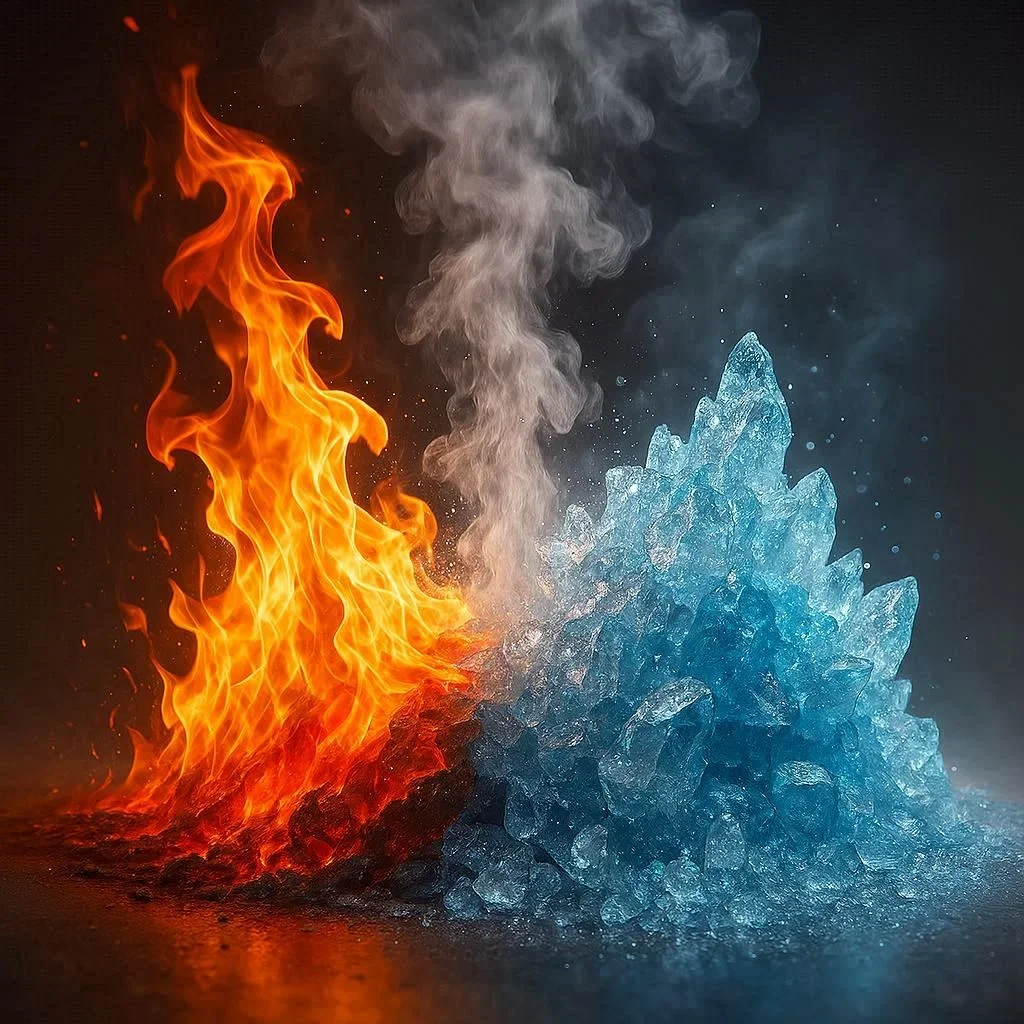

Rock Salt Crystals Freezing Point is a fascinating experiment that blends simple kitchen chemistry with fundamental principles of thermodynamics. By crystallizing sodium chloride from a saturated solution and then observing how the addition of a second solute lowers the freezing point, you can witness the classic phenomenon of freezing point depression in real time. This hands‑on activity not only produces beautiful, translucent crystals but also provides a tangible illustration of how solute particles interfere with the orderly arrangement of water molecules during phase change.
Gathering Materials and Setting Up the Experiment
To begin, you’ll need a few basic supplies that are easy to find in most households or local stores:
- Table salt (sodium chloride) – 2–3 tablespoons per cup of water
- Distilled or de‑ionized water – 1 cup
- Heat‑resistant glass or plastic container
- Stirring rod or spoon
- Thermometer (optional but useful for precise measurements)
- Ice bath or refrigerator for cooling
- Optional: a second solute such as sugar or ethanol for the depression study
First, dissolve the salt in the water by heating gently on a stove or using a microwave. Stir until no more crystals remain in the solution. This saturated solution is the starting point for crystal growth. Pour the solution into a clean container and allow it to cool slowly at room temperature. As the temperature drops, the solution becomes supersaturated, and salt crystals begin to nucleate and grow.
Observing Crystal Formation and Morphology
Once the crystals have formed, you can examine their shape and size. Rock salt typically crystallizes in a cubic lattice, producing sharp, well‑defined edges. The rate of cooling influences crystal size: slower cooling yields larger, more perfect crystals, while rapid cooling results in smaller, more irregular formations. This visual aspect of the experiment is a great way to discuss crystallography and the importance of lattice structures in solid-state chemistry.
Introducing Freezing Point Depression
After you have a clear view of the pure salt crystals, it’s time to explore how adding another solute affects the freezing point. Take a fresh batch of saturated salt solution and add a small amount of sugar or ethanol. Stir thoroughly to ensure uniform distribution. Then, place the solution in an ice bath or refrigerator and monitor the temperature at which the liquid begins to freeze. You will notice that the mixture freezes at a lower temperature than the pure salt solution, demonstrating the principle of freezing point depression.
Freezing point depression occurs because solute particles disrupt the ability of water molecules to form a solid lattice. The more solute present, the greater the depression. This effect is quantified by the equation ΔT_f = i·K_f·m, where ΔT_f is the temperature change, i is the van ’t Hoff factor, K_f is the cryoscopic constant, and m is the molality of the solute. For sodium chloride, i is approximately 2 because it dissociates into Na⁺ and Cl⁻ ions.
Real‑World Applications of Freezing Point Depression
Understanding freezing point depression is essential in many industries. For example, road salt is applied to icy surfaces to lower the freezing point of water, preventing ice formation and improving traction. In the food industry, sugar and salt are used to preserve foods by reducing the water activity, which also involves freezing point considerations. Even in cryopreservation, controlled solute concentrations help protect biological samples during freezing.
Connecting the Experiment to Thermodynamic Principles
The experiment illustrates key concepts in thermodynamics, such as enthalpy, entropy, and Gibbs free energy. When a solute is added, the system’s entropy increases because the solute particles add disorder. This increase in entropy offsets the enthalpic favorability of the solid phase, thereby lowering the temperature at which the free energy of the liquid equals that of the solid. By measuring the exact freezing point of each solution, students can calculate the enthalpy of fusion and compare it to theoretical values.
Using Online Resources for Deeper Insight
For those interested in exploring the science further, the following authoritative sources provide comprehensive explanations and data:
- Freezing point depression – Wikipedia
- NIST Small Sample Thermometry – National Institute of Standards and Technology
- Crystallization – Chemistry Explained
- Freezing Point Depression – ScienceDirect
Safety Tips and Best Practices
While the experiment is generally safe, it’s important to follow basic laboratory safety guidelines:
- Wear safety goggles and gloves when handling hot solutions.
- Use a heat‑resistant container to avoid thermal shock.
- Keep the experiment away from children and pets.
- Dispose of leftover solutions responsibly, following local regulations.
Conclusion: From Classroom to Real Life
By making rock salt crystals and studying freezing point depression, you gain hands‑on experience with core chemical concepts that have real‑world relevance. Whether you’re a student, hobbyist, or educator, this experiment offers a clear demonstration of how solutes influence phase transitions and how these principles are applied in everyday scenarios—from de‑icing roads to preserving food.
Ready to explore more chemistry experiments? Subscribe to our newsletter for weekly guides, safety tips, and the latest science news. Click here to join our community of curious minds!
Frequently Asked Questions
Q1. What is the freezing point of a saturated rock salt solution?
The freezing point of a saturated sodium chloride solution is around -21 °C. This is significantly lower than pure water’s 0 °C due to the presence of dissolved ions. The exact value depends on the concentration and temperature of the solution. In a typical classroom experiment, you’ll observe freezing around -15 °C to -20 °C.
Q2. How does adding sugar or ethanol lower the freezing point?
When a second solute is added, its particles occupy space in the liquid, preventing water molecules from arranging into a solid lattice. This disruption increases the system’s entropy and requires a lower temperature to achieve the same free‑energy balance. The more solute present, the greater the depression, following ΔT_f = i·K_f·m.
Q3. Why do rock salt crystals grow in a cubic shape?
NaCl crystallizes in a face‑centered cubic lattice, which naturally produces sharp, well‑defined cubic crystals. The growth rate along each crystallographic axis is equal, giving the characteristic cube. Faster cooling can distort the shape, but the underlying lattice remains cubic.
Q4. What safety precautions should I take when heating salt solutions?
Always wear safety goggles and heat‑resistant gloves when handling hot solutions. Use a heat‑resistant container to avoid thermal shock. Keep the experiment away from children and pets, and dispose of leftover solutions responsibly. If you spill hot liquid, let it cool before cleaning.
Q5. Can I use this experiment to calculate the enthalpy of fusion?
Yes, by measuring the exact freezing point of the saturated solution and comparing it to the pure water freezing point, you can calculate the enthalpy of fusion using the Clausius–Clapeyron relation. The experiment provides a practical way to link thermodynamic theory with real data. However, precise temperature control and accurate measurements are essential for reliable results.