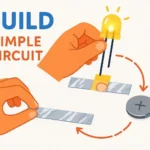
Have you ever wondered how a simple electric circuit can be built using everyday household items like paper and aluminum foil? Simple electric circuits are a fantastic way to introduce the fundamentals of electricity, conductors, and insulators to students, hobbyists, and curious minds alike. By combining the conductive properties of aluminum foil with the insulating nature of paper, you can create a functional circuit that lights a small LED, powers a tiny motor, or even demonstrates basic principles of voltage and current. This guide will walk you through the materials, steps, science, and creative variations that make paper‑and‑foil circuits both educational and fun.
Materials You’ll Need
- Standard printer paper or cardstock (thin paper works best)
- Aluminum foil (thin, flexible, and conductive)
- Small LED (light‑emitting diode) or a low‑voltage battery (1.5 V AA)
- Electrical tape or masking tape
- Scissors or a paper cutter
- Optional: a small resistor (220 Ω) to protect the LED
- Optional: a multimeter for measuring voltage and current
All of these items are inexpensive and readily available, making this project ideal for classrooms, science fairs, or a weekend experiment at home.
Step‑by‑Step Circuit Construction
Follow these steps to build a basic paper circuit that powers an LED. The process is simple, but precision matters to ensure a reliable connection.
- Prepare the paper base. Cut a rectangular strip of paper about 10 cm by 5 cm. This will serve as the insulating substrate.
- Lay the aluminum foil. Place a strip of foil along one edge of the paper, leaving a small gap (about 1 cm) from the opposite edge. This foil strip will act as the circuit’s “wire.”
- Attach the LED. Position the LED’s longer lead (anode) on the foil strip and the shorter lead (cathode) on the paper’s opposite edge. Use a small piece of tape to secure the LED in place.
- Complete the circuit. Connect a battery or power source to the foil strip and the paper edge. If using a battery, attach one terminal to the foil and the other to the paper edge with a piece of tape or a small resistor.
- Test the circuit. Once connected, the LED should light up. If it doesn’t, check for loose connections or a short circuit caused by foil touching the paper edge.
Congratulations! You’ve just built a functioning paper circuit. By experimenting with different shapes, foil lengths, and additional components, you can explore more complex electrical concepts.
Understanding the Science Behind Paper Circuits
At its core, a paper circuit demonstrates the flow of electrons through a conductive path. Aluminum foil is a good conductor because its electrons are loosely bound and can move freely. Paper, on the other hand, is an insulator; its tightly bound electrons resist flow, preventing current from passing through unless a conductive path is provided.
When you connect a battery to the foil and paper, electrons flow from the negative terminal of the battery, through the foil, into the LED, and finally back to the positive terminal. The LED emits light as electrons recombine with holes in the semiconductor material, releasing energy in the form of photons. This process is described in detail on the Electric Circuit Wikipedia page.
Using a multimeter, you can measure the voltage drop across the LED and the current flowing through the circuit. This hands‑on measurement reinforces the relationship between voltage, current, and resistance, as explained in the Khan Academy lesson on circuits.
Creative Variations and Extensions
Once you’ve mastered the basic setup, you can explore a variety of extensions that deepen your understanding and add fun to the experiment:
- Multiple LEDs. Connect several LEDs in series or parallel to observe how current distribution changes.
- Switches. Incorporate a simple paper switch by folding a piece of foil to create a breakable contact point.
- Resistors. Add a resistor to limit current and protect the LED, preventing it from burning out.
- Paper thickness. Experiment with thicker paper or cardstock to see how insulation affects circuit reliability.
- Educational kits. Use the Science Buddies paper circuit kit for a guided learning experience.
- Solar power. Replace the battery with a small solar panel to power the LED, illustrating renewable energy principles.
These variations not only keep the project engaging but also provide practical demonstrations of key electrical concepts such as series vs. parallel circuits, Ohm’s law, and the role of resistive elements.
Safety Tips and Best Practices
Even though the voltages involved are low, it’s important to follow safety guidelines:
- Always use a low‑voltage power source (1.5 V or less) to avoid shock.
- Keep the foil away from metal surfaces that could cause a short circuit.
- Use a resistor if you plan to power higher‑current devices.
- Dispose of used batteries responsibly, following local regulations.
By adhering to these precautions, you can safely explore the fundamentals of electricity while fostering curiosity and creativity.
Conclusion and Call to Action
Building simple electric circuits with paper and aluminum foil is an accessible, hands‑on way to demystify electricity. Whether you’re a teacher looking for a classroom demonstration, a parent wanting to spark a child’s interest in STEM, or a hobbyist eager to experiment, this project offers a low‑cost, high‑learning experience. The principles you learn—conductivity, insulation, voltage, current, and resistance—are foundational to all electrical engineering and physics.
Now that you know the materials, steps, science, and creative extensions, it’s time to roll up your sleeves and start building. Gather your supplies, follow the guide, and watch your paper circuit light up. Share your results, photos, or variations with friends, classmates, or online communities to inspire others. Try building your own paper circuit today and ignite your curiosity about the world of electricity!
Frequently Asked Questions
Q1. What materials do I need to build a paper circuit?
You’ll need standard printer paper or cardstock, thin aluminum foil, a small LED or a 1.5 V AA battery, electrical tape, scissors, and optionally a resistor or a multimeter. All items are inexpensive and commonly found at home or in a school supply kit.
Q2. How does a paper circuit work?
The foil acts as a conductor, allowing electrons to flow from the battery to the LED. Paper is an insulator, so it prevents current from leaking unless a conductive path is provided. When the circuit is closed, the LED lights as electrons recombine with holes in the semiconductor.
Q3. Can I use thicker paper or cardstock for the circuit?
Yes, but thicker paper may reduce flexibility and make it harder to fold or shape the foil. It can also increase the distance between contacts, potentially affecting the circuit’s reliability. Experiment with different thicknesses to see how insulation impacts performance.
Q4. What safety precautions should I follow?
Always use low‑voltage sources (1.5 V or less) to avoid shock. Keep foil away from metal surfaces to prevent short circuits, use a resistor when powering higher‑current devices, and dispose of batteries responsibly according to local regulations.
Q5. How can I extend the basic paper circuit project?
You can add multiple LEDs in series or parallel, create a paper switch by folding foil, incorporate a resistor to limit current, experiment with different paper thicknesses, or replace the battery with a small solar panel to explore renewable energy concepts.