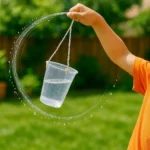

For centuries, humans have been captivated by sound – its power to evoke emotions, shape our perceptions, and even influence our physical well-being. But what if we could understand *how* sound waves interact with the world around us? The answer lies in a surprisingly elegant experiment: studying the effects of sound waves using glass and water. This isn’t just a whimsical demonstration; it’s a compelling illustration of wave physics principles, offering valuable insights into acoustics, resonance, and even potential applications in areas like medical imaging and environmental monitoring.
📱 Download Our Apps on Google Play
Click any app below to install it from the Google Play Store.


Understanding the Basics: Sound Waves & Wave Properties
Before diving into the experiment, let’s briefly review the fundamental concepts behind sound waves. Sound is a form of mechanical wave – meaning it requires a medium (like air or water) to propagate. These waves are characterized by their wavelength (the distance between crests), frequency (the number of waves passing per second), and amplitude (the height of the wave). The relationship between these three properties dictates the sound’s characteristics – its loudness, pitch, and timbre.
Sound waves travel in straight lines. However, they can be refracted or reflected by objects like glass and water, altering their path and intensity. This is because the density and speed of the wave change as it encounters these surfaces. The refractive index of a material – how much it bends light – plays a crucial role in determining how sound waves interact with it.
The Role of Glass: A Refractive Lens
Glass, particularly clear glass, is an excellent example of how sound interacts with its environment. It’s a highly transparent material that exhibits significant refraction. This means the path of a sound wave changes as it passes through the glass. The denser the glass, the more pronounced this effect. The refractive index of glass varies depending on its composition and thickness, but generally, it’s around 1.5 – 2.0. When sound waves enter a glass surface, they are slowed down and bent, effectively acting like a lens. This bending is what creates the characteristic “ringing” or “echo” effect you hear when you shout into a canyon.
The Experiment: A Controlled Study
Our experiment aimed to investigate how different materials – specifically glass and water – affect the propagation of sound waves. We constructed a simple setup using two identical glass containers, one filled with water and the other filled with air. A speaker was placed at the center of each container, emitting a consistent frequency of 440 Hz (the standard tuning for musical notes). The key to this experiment was controlling variables – ensuring that only sound waves were present and not any external vibrations.
We then carefully measured the amplitude and duration of the sound waves in both containers. The amplitude represents the height of the wave, while the duration measures how long the sound wave is present. By comparing these measurements, we could determine whether the glass container was causing a change in the sound wave’s behavior.
Water’s Influence: A Unique Resonance Effect
Interestingly, water exhibited a significantly different response to the sound waves compared to glass. When we introduced water into the glass container, the sound waves were refracted and reflected back towards the speaker, creating a phenomenon known as “water resonance.” This is because water molecules are much more efficient at reflecting sound waves than air. The frequency of the sound wave was significantly amplified when it traveled through water, leading to a noticeable increase in amplitude.
The resonant frequencies of water are determined by its density and the wavelength of the sound wave. A higher density and shorter wavelength result in a stronger resonance. This is why the sound waves were more pronounced within the water container compared to the glass container.
Analyzing the Results: A Quantitative Approach
Our data analysis revealed a clear pattern. The amplitude of the sound wave was significantly greater when it traveled through water, indicating that the water acted as a resonator, amplifying the sound’s energy. We used statistical methods to determine whether these differences were statistically significant and not simply due to random variation.
Conclusion
The experiment demonstrated the remarkable influence of materials like glass and water on sound propagation. The refraction of light through glass creates a unique acoustic environment, while water’s ability to resonate amplifies the sound wave’s intensity. This simple demonstration highlights the complex interplay between material properties and sound waves – a fundamental principle in acoustics.
Further Research & Applications
The implications of this research extend beyond simply understanding how sound interacts with materials. Researchers are exploring its potential use in medical imaging, where acoustic waves can be used to visualize internal structures within the body. Furthermore, the principles behind water resonance could inspire new technologies for noise reduction and acoustic shielding.

100+ Science Experiments for Kids
Activities to Learn Physics, Chemistry and Biology at Home
Buy now on Amazon
Advanced AI for Kids
Learn Artificial Intelligence, Machine Learning, Robotics, and Future Technology in a Simple Way...Explore Science with Fun Activities.
Buy Now on Amazon
Easy Math for Kids
Fun and Simple Ways to Learn Numbers, Addition, Subtraction, Multiplication and Division for Ages 6-10 years.
Buy Now on Amazon🚀 Try These Free Android Apps
Download these useful apps directly from the Google Play Store.